Keep ahead of the pack
Join our mailing list and be the first to hear our latest news and biggest announcements.
By signing up you agree to our privacy policy. You can unsubscribe at any time.
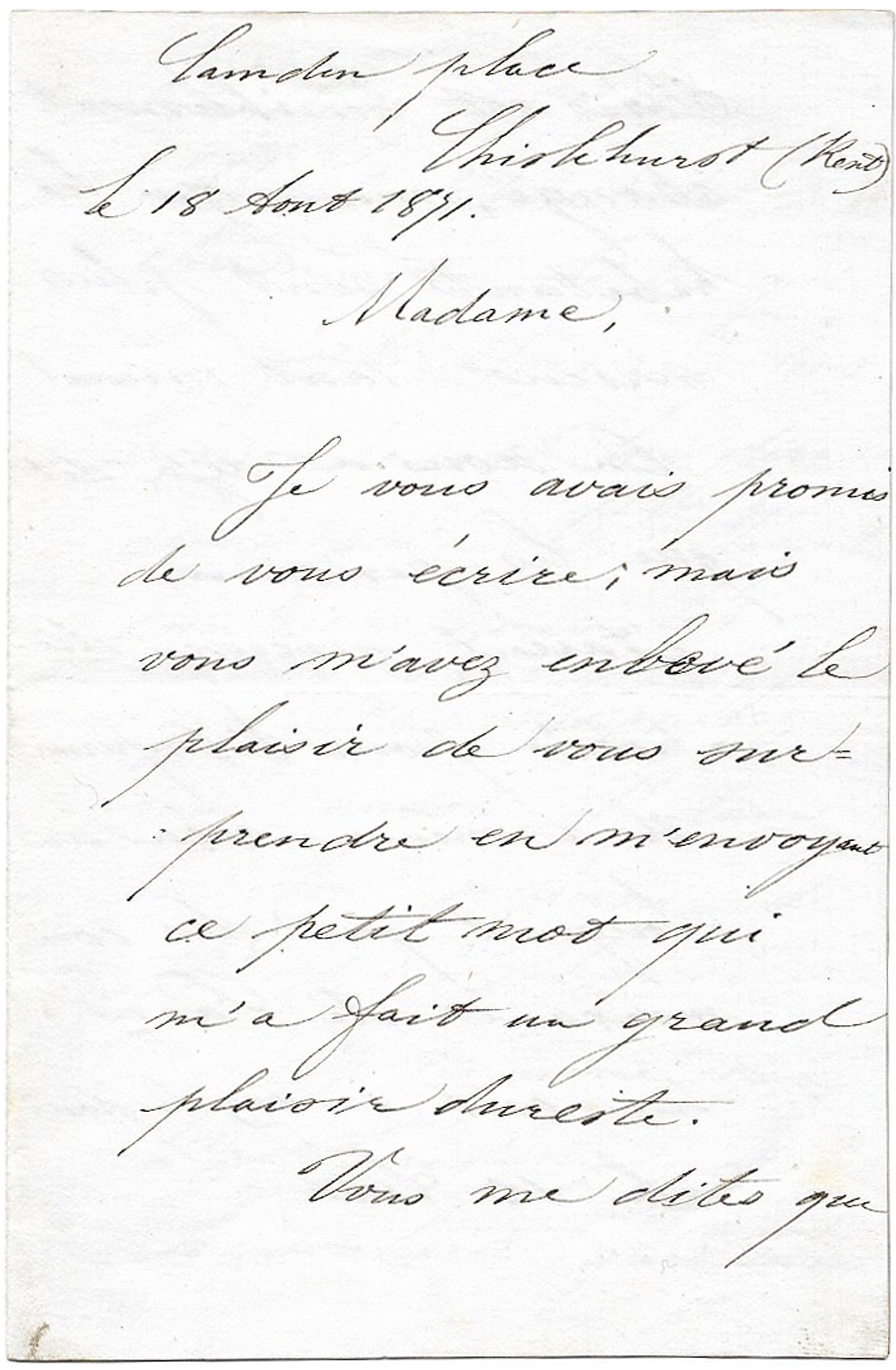
Autograph letter signed « Louis-Napoléon » [to Mathilde de Saulcy]
Camden Place, Chislehurst (Kent), 18 August 1871, 4 p. in-12°
« We have already been told that Parisians were more favorably disposed toward the Emperor »
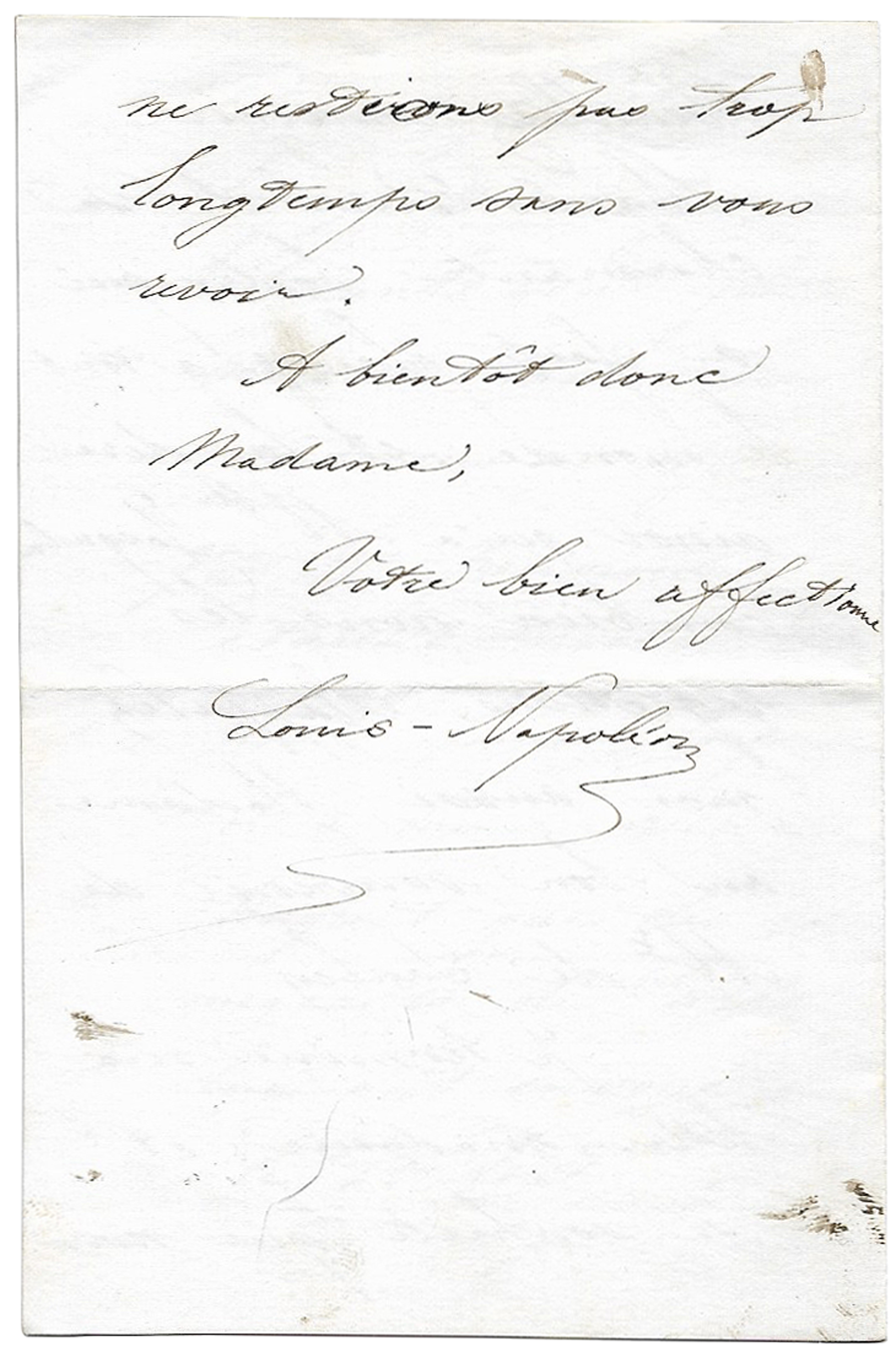
Autograph letter signed « Louis-Napoléon » [to Mathilde de Saulcy]
Camden Place, Chislehurst (Kent), 18 August 1871, 4 p. in-12°
Light ink smudges, in fine condition throughout
The Imperial Prince reacts to news from Paris in the aftermath of the “Year of disaster”
From the Jean-Claude Lachnitt collection
« Madame,
Je vous avais promis de vous écrire ; mais vous m’avez enlevé le plaisir de vous surprendre en m’envoyant ce petit mot qui m’a fait un grand plaisir du reste.
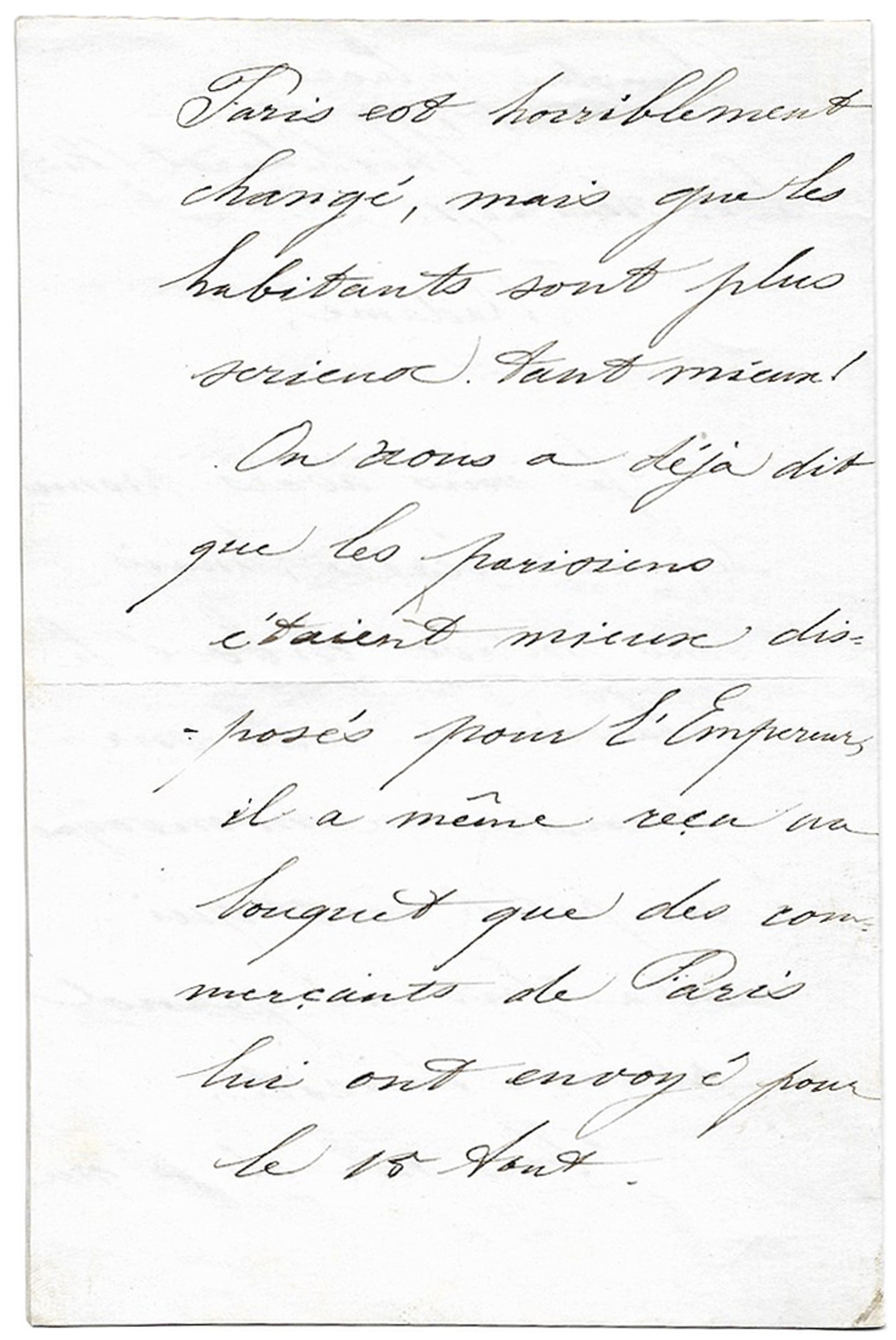
Vous me dites que Paris est horriblement changé, mais que les habitants sont plus sérieux, tant mieux !
On nous a déjà dit que les parisiens étaient mieux disposés pour l’Empereur, il a même reçu un bouquet que les commerçants de Paris lui ont envoyé pour le 15 Août.
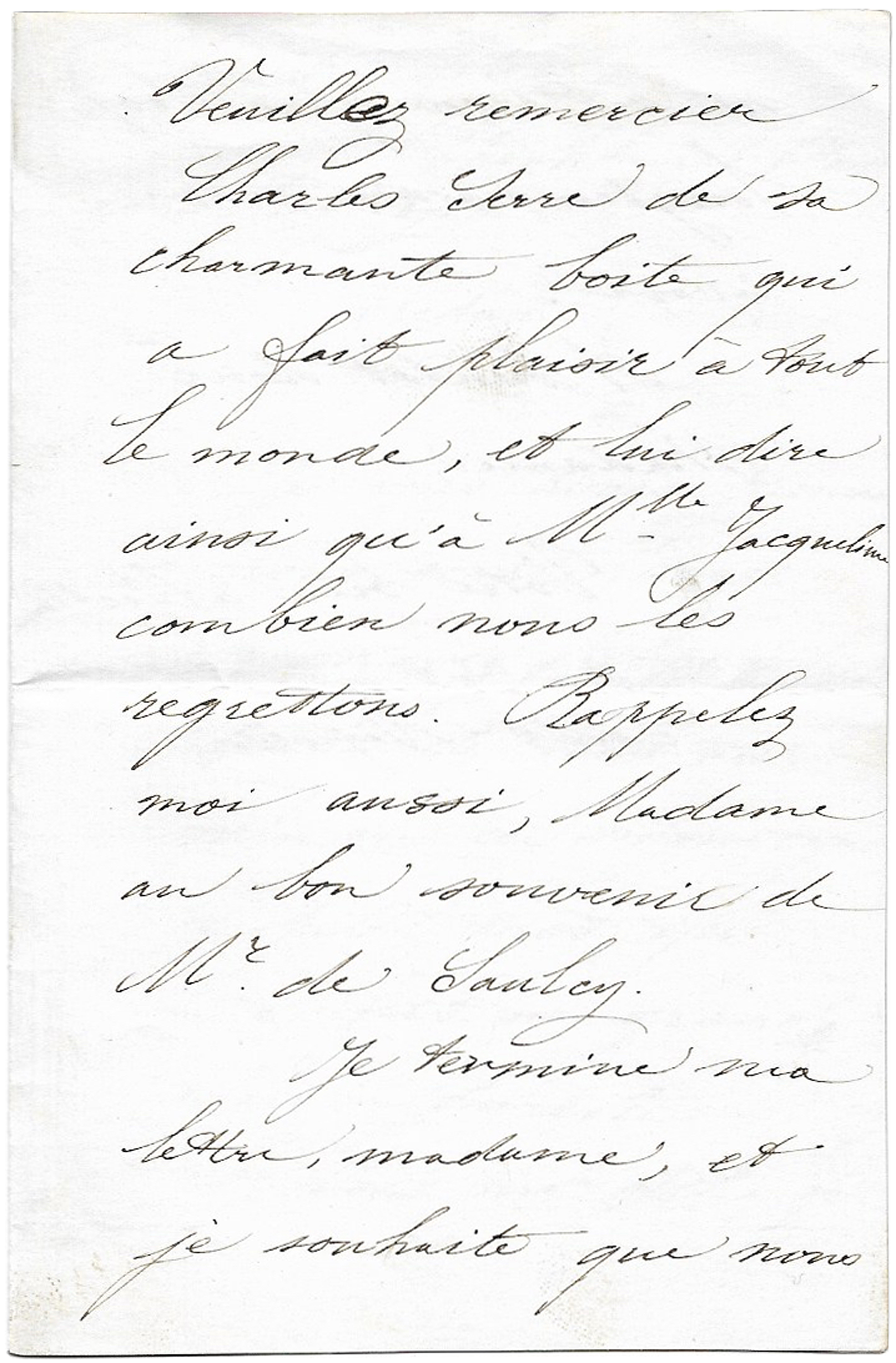
Veuillez remercier Charles Serre de sa charmante boite qui a fait plaisir à tout le monde, et lui dire ainsi qu’à Jacqueline combien nous les regrettons. Rappelez moi aussi, Madame au bon souvenir de Mr de Saulcy.
Je termine ma lettre, madame, et je souhaite que nous ne restions pas trop longtemps sans vous revoir
À bientôt donc Madame,
Votre bien affectionné
Louis-Napoléon »
Between the Siege of Paris and the Commune (1870–1871), France experienced a major political crisis, marked by unprecedented institutional instability and urban violence. The capital, first besieged by the Prussians (September 1870–January 1871) and then shaken by the Communard uprising (March–May 1871), embodied the fractures of a society divided among republicans, monarchists, and Bonapartists. Released by Bismarck in March 1871 after his capture at Sedan, Napoleon III, though ailing, and his son, the Imperial Prince, still harbored hopes of a political return, as evidenced by epistolary references to a Paris “better disposed” toward the Emperor and symbolic gestures such as the bouquet offered on August 15, 1871 (the anniversary of Napoleon I). These Bonapartist aspirations, though marginal, revealed the persistence of nostalgic attachment to the Empire in a context where the fledgling Third Republic struggled to assert itself against monarchists and the aftermath of defeat.
Mathilde de Billing, wife of the archaeologist and museum curator Félicien Caignart de Saulcy, had served as a lady-in-waiting to Empress Eugénie.
Provenance:
Jean-Claude Lachnitt
Join our mailing list and be the first to hear our latest news and biggest announcements.
By signing up you agree to our privacy policy. You can unsubscribe at any time.