Keep ahead of the pack
Join our mailing list and be the first to hear our latest news and biggest announcements.
By signing up you agree to our privacy policy. You can unsubscribe at any time.
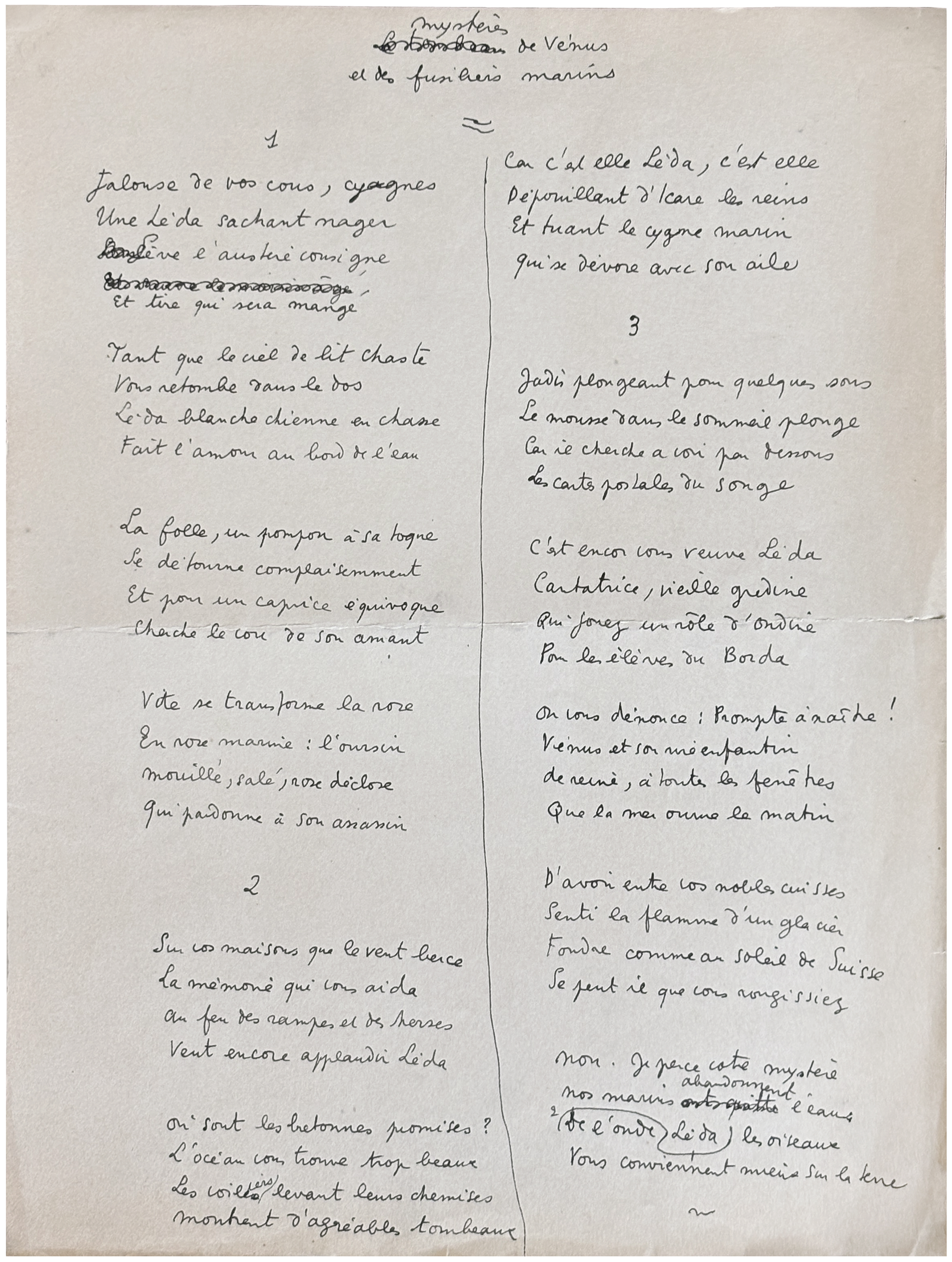
Autograph poem: « Mystères de Vénus et des fusiliers marins »
N.p.n.d. [c. 1917-1920], 1 p. in-folio
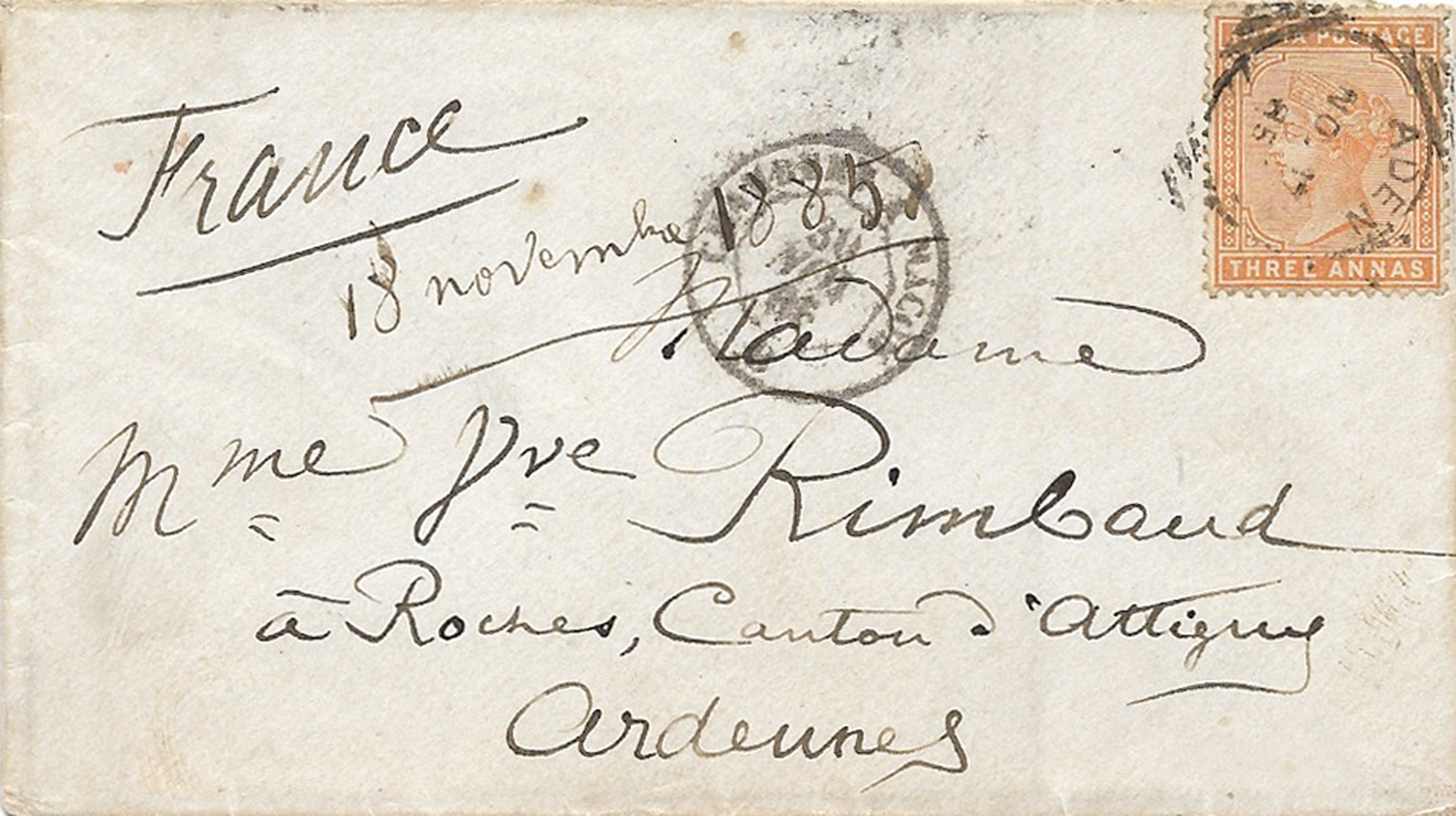
« Into sea-rose: the sea urchin / Wet, salted, a rose unclosed / That forgives its assassin »
Autograph poem: « Mystères de Vénus et des fusiliers marins »
N.p.n.d. [c. 1917-1920], 1 p. in-folio
Slight splits along the central fold and at the margins
Several words crossed out by Cocteau
The only known manuscript of this very fine poem with ambivalent erotic allusions, long left unpublished
« 1.
Jalouse de vos cous, cygnes
Une Léda sachant nager
Lève l’austère consigne
Et tire qui sera mangé
Tant que le ciel de lit chaste
Vous retombe dans le dos
Léda blanche chienne en chasse
Fait l’amour au bord de l’eau
La folle, un pompon à sa toque
Se détourne complaisamment
Et pour un caprice équivoque
Cherche le cou de son amant
Vite se transforme la rose
En rose marine : l’oursin
Mouillé, salé, rose déclose
Qui pardonne à son assassin
2.
Sur vos maisons que le vent berce
La mémoire qui vous aida
Au feu des rampes et des herses
Veut encore applaudir Léda
Où sont les Bretonnes promises ?
L’océan vous trouve trop beaux
Les voiliers levant leurs chemises
Montrent d’agréables tombeaux
Car c’est elle Léda, c’est elle
Dépouillant d’Icare les reins
Et tuant le cygne marin
Qui se dévore avec son aile
3.
Jadis plongeant pour quelques sous
Le mousse dans le sommeil plonge
Car il cherche à voir par dessous
Les cartes postales du songe
C’est encore vous veuve Léda
Cantatrice, vieille gredine
Qui jouez un rôle d’ondine
Pour les élèves du Borda
On vous dénonce : Prompte à naître !
Vénus et son rire enfantin
De reine, à toutes les fenêtres
Que la mer ouvre le matin
D’avoir entre vos nobles cuisses
Senti la flamme d’un glacier
Fondre comme au soleil de Suisse
Se peut-il que vous rougissiez
Non. Je perce votre mystère
Nos marins abandonnent l’eau
Léda de l’onde les oiseaux
Vous conviennent mieux sur la terre. »
In his edition of the Cahiers de L’Herne devoted to the poet, David Gullentops points out that this poem belongs to the same period of composition as the eponymous text “Mystères de Vénus et des fusiliers marins,” published in L’Œuf dur in 1923 (OPC, Pléiade, pp. 1508–1509). It should nevertheless be noted that Cocteau revised the title at the head of the present manuscript, which he had initially called “Le Tombeau de Vénus et des fusiliers marins,” before changing his mind. While this poem is neither a first draft nor a variant of the one published in L’Œuf dur, the two texts nonetheless evoke the period when Cocteau shared the fate of the fusiliers marins on the Belgian front at Nieuport in 1916. With this difference, however, that the present poem marks the emergence of a coded erotic poetry characteristic of the collection Vocabulaire. Evidence of this may be found in the motif of the sea urchin, a sea-rose alternately closed and unclosed, alternately masculine and feminine, particularly apt to express the theme of sexual ambivalence (David Gullentops, Cahiers Cocteau). Cocteau would moreover take up the motif of the sea urchin in his frescoes at the Villa Santo Sospir in Saint-Jean-Cap-Ferrat, and in the chapel of Villefranche-sur-Mer.
Provenance:
Librairie Bernard Loliée
Bibliography:
Cocteau, Cahiers de L’Herne, (dir. David Gullentops), 2016, p. 6 et 7
Join our mailing list and be the first to hear our latest news and biggest announcements.
By signing up you agree to our privacy policy. You can unsubscribe at any time.