Keep ahead of the pack
Join our mailing list and be the first to hear our latest news and biggest announcements.
By signing up you agree to our privacy policy. You can unsubscribe at any time.
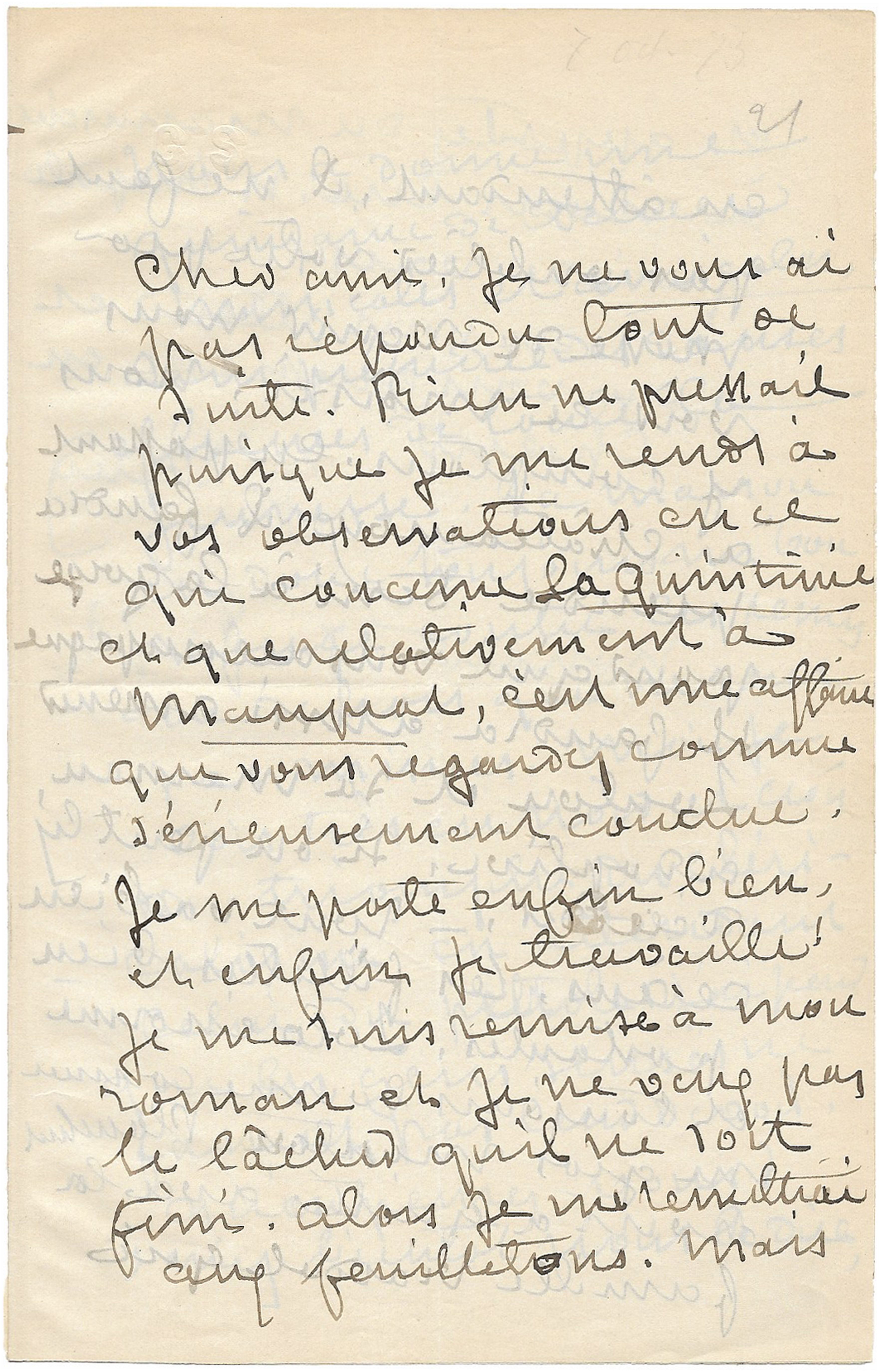
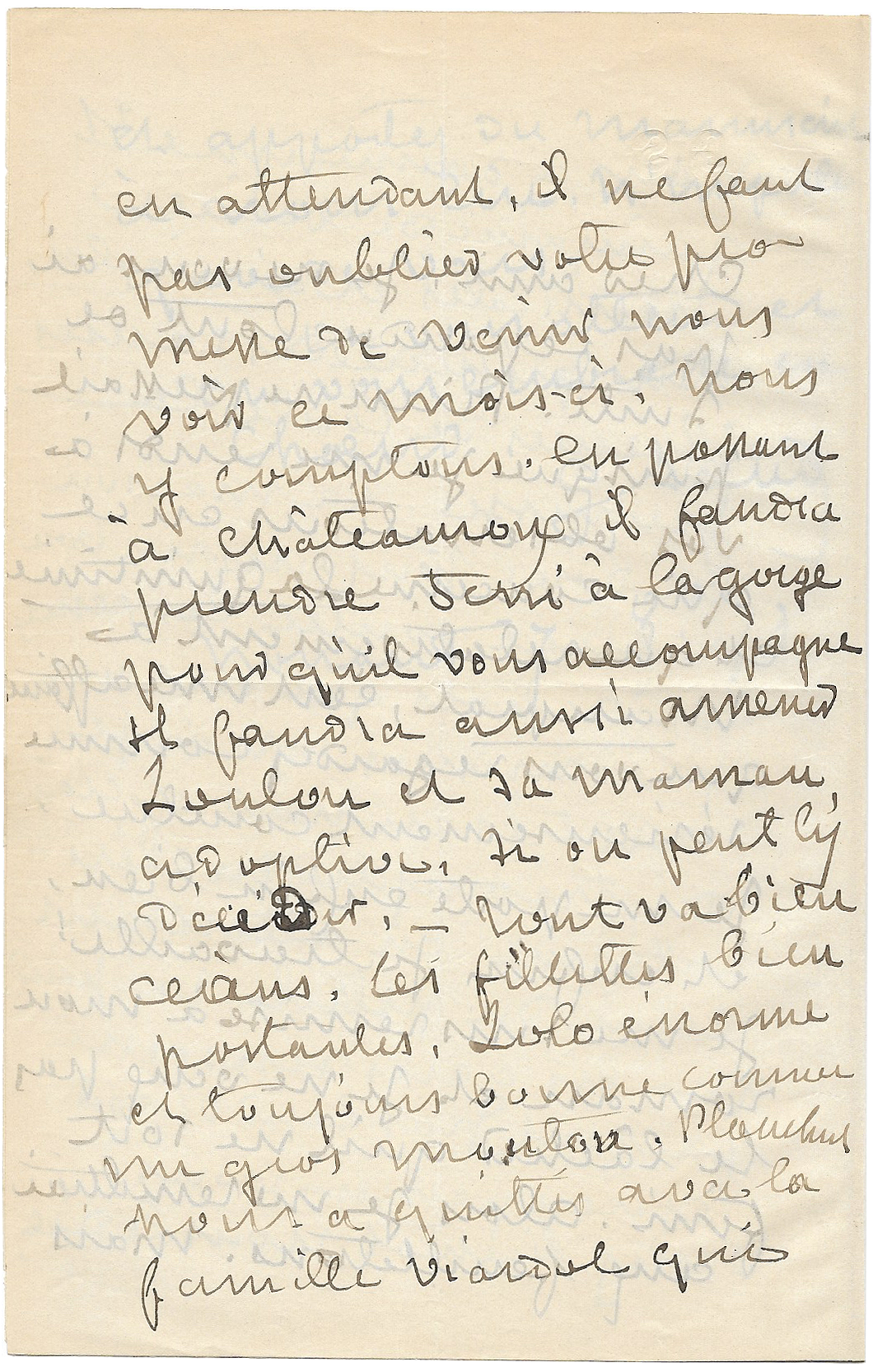
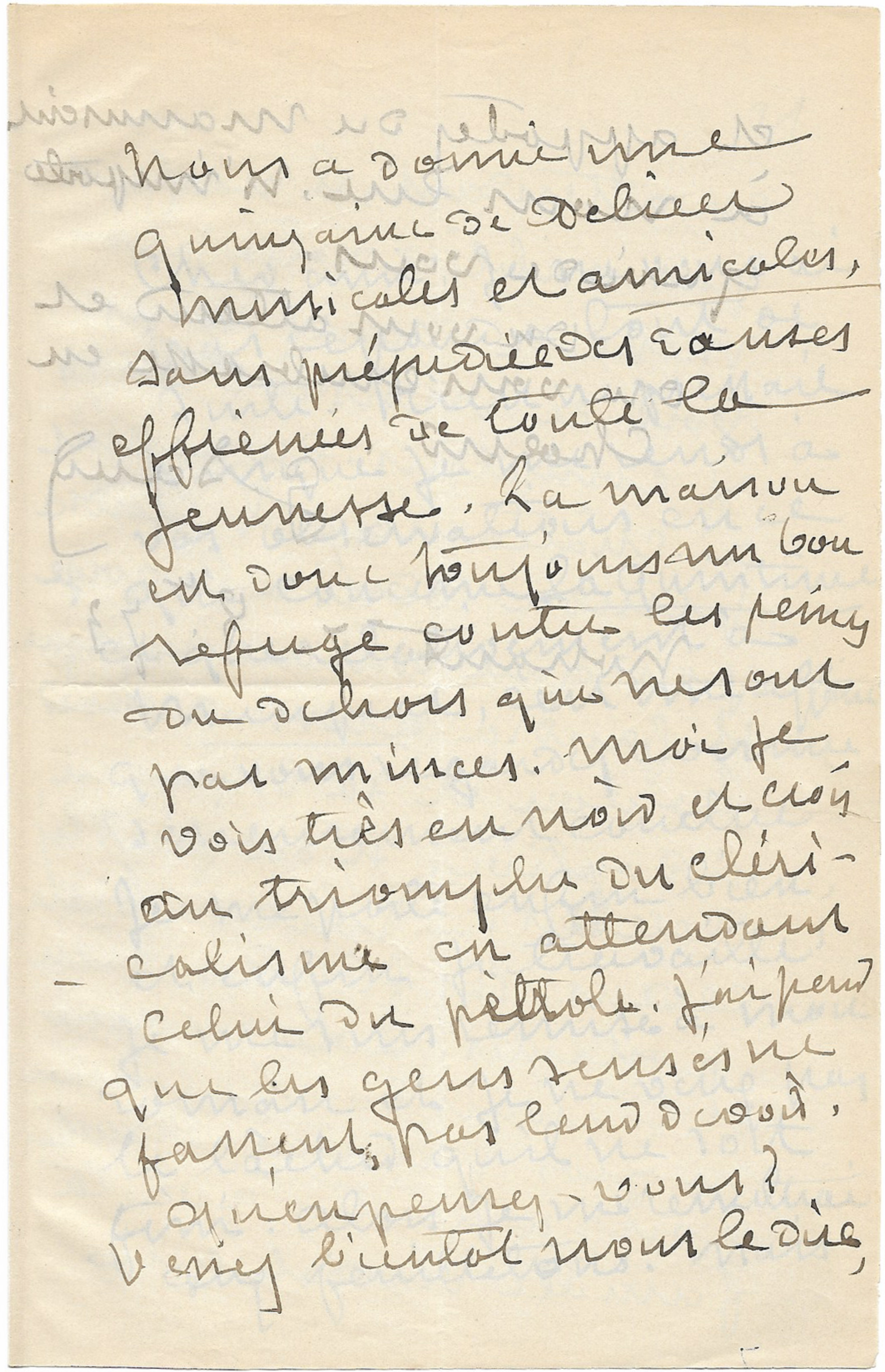
Autograph letter signed « GSand » [to Charles-Edmond Chojecki]
Nohant, 7 Oct. 1873, 3 p. 1/2 in-8°
« Home is therefore always a good refuge from the hardships of the outside world »
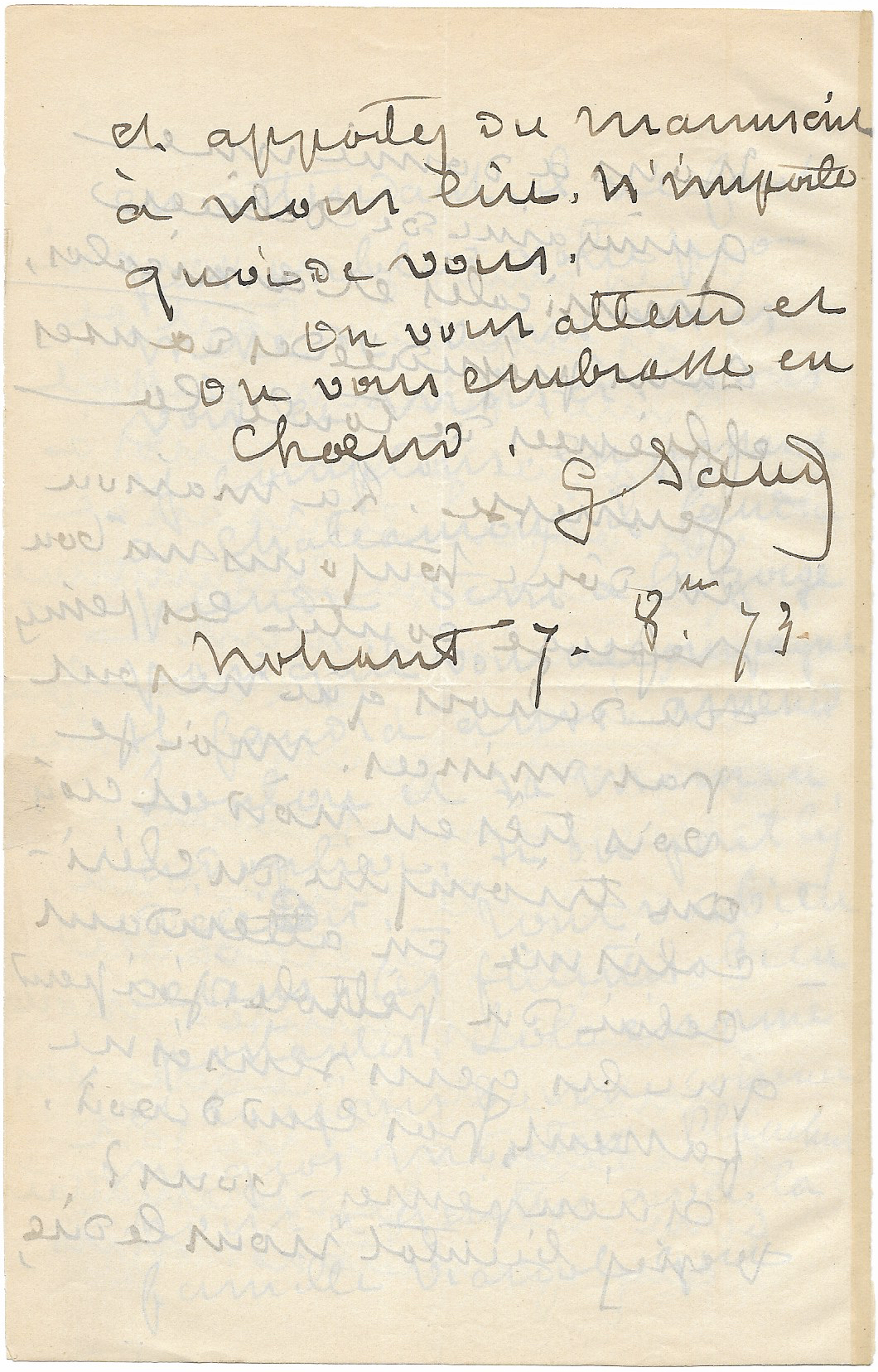
Autograph letter signed « GSand » [to Charles-Edmond Chojecki]
Nohant, 7 Oct. 1873, 3 p. 1/2 in-8°
Her initials embossed on letterhead
A long letter to one of her close confidants about the theatrical revival of Mauprat, a project to adapt his scandalous novel La Quintinie for the stage, and daily life at Nohant
« Cher ami, je ne vous ai pas répondu tout de suite. Rien ne pressait puisque je me rends à vos observations en ce qui concerne La Quintinie et que relativement à Mauprat, c’est une affaire que vous regardez comme sérieusement conclue. Je me porte enfin bien, et enfin je travaille ! Je me suis remise à mon roman [Ma sœur Jeanne] et je ne veux pas le lâcher qu’il ne soit fini. Alors je me remettrai aux feuilletons. Mais en attendant, il ne faut pas oublier votre promesse de venir nous voir ce mois-ci. En passant par Châteauroux, il faudra prendre Ferri à la gorge pour qu’il vous accompagne. Il faudra aussi amener Loulou et sa maman adoptive, si on peut l’y décider. – Tout va bien céans, les fillettes sont bien portantes, Lolo énorme et toujours bonne comme un gros mouton. Plauchut nous a quitté avec la famille Viardot qui nous a donné une quinzaine de délices musicales et amicales sans préjudices des danses effrénées de toute la jeunesse. La maison est donc toujours un bon refuge contre les peines du dehors qui ne sont pas minces. Moi je vois très en noir et crois au triomphe du cléricalisme en attendant celui du pétrole[allusion aux incendies de la Commune]. J’ai peur que les gens censés ne fassent pas leur devoir. Qu’en pensez-vous ? Venez bientôt nous le dire et apportez du manuscrit à nous lire. N’importe quoi de vous.
On vous attend et on vous embrasse en chœur.
GSand »
A scarcely veiled critique of Christianity, Mademoiselle La Quintinie was published in 1863 by Michel Lévy frères. The work provoked the wrath of the Church—and for good reason: in the novel’s preface, Sand accuses it of forcing people to “believe in the Devil and in the eternal torments of Hell.” In 1872, she decided to adapt it for the stage under the same title, submitting the play to the Odéon Theatre. Welcomed enthusiastically by the management, the play was banned by the censors for anticlericalism and was ultimately never performed during the author’s lifetime.
Throughout her life, George Sand maintained close ties with Polish-Lithuanian refugees, persecuted by the Russian Empire during the first half of the nineteenth century. Initially a journalist based in Poland, Charles-Edmond Chojecki settled in Paris in 1844. Counted among the most prominent journalists of his time, he contributed to the Revue indépendante, co-edited by George Sand, and chaired the board of directors of the newspaper Le Temps. He published numerous works by the novelist in serialized form in the newspapers under his direction. Their correspondence, which spans from 1855 to 1875, comprises some 350 exchanges.
Provenance:
Gimpel coll.
Then private coll.
Bibliography:
Correspondance, t. XXIII, éd. G. Lubin, Garnier, n°16753
Join our mailing list and be the first to hear our latest news and biggest announcements.
By signing up you agree to our privacy policy. You can unsubscribe at any time.