Keep ahead of the pack
Join our mailing list and be the first to hear our latest news and biggest announcements.
By signing up you agree to our privacy policy. You can unsubscribe at any time.
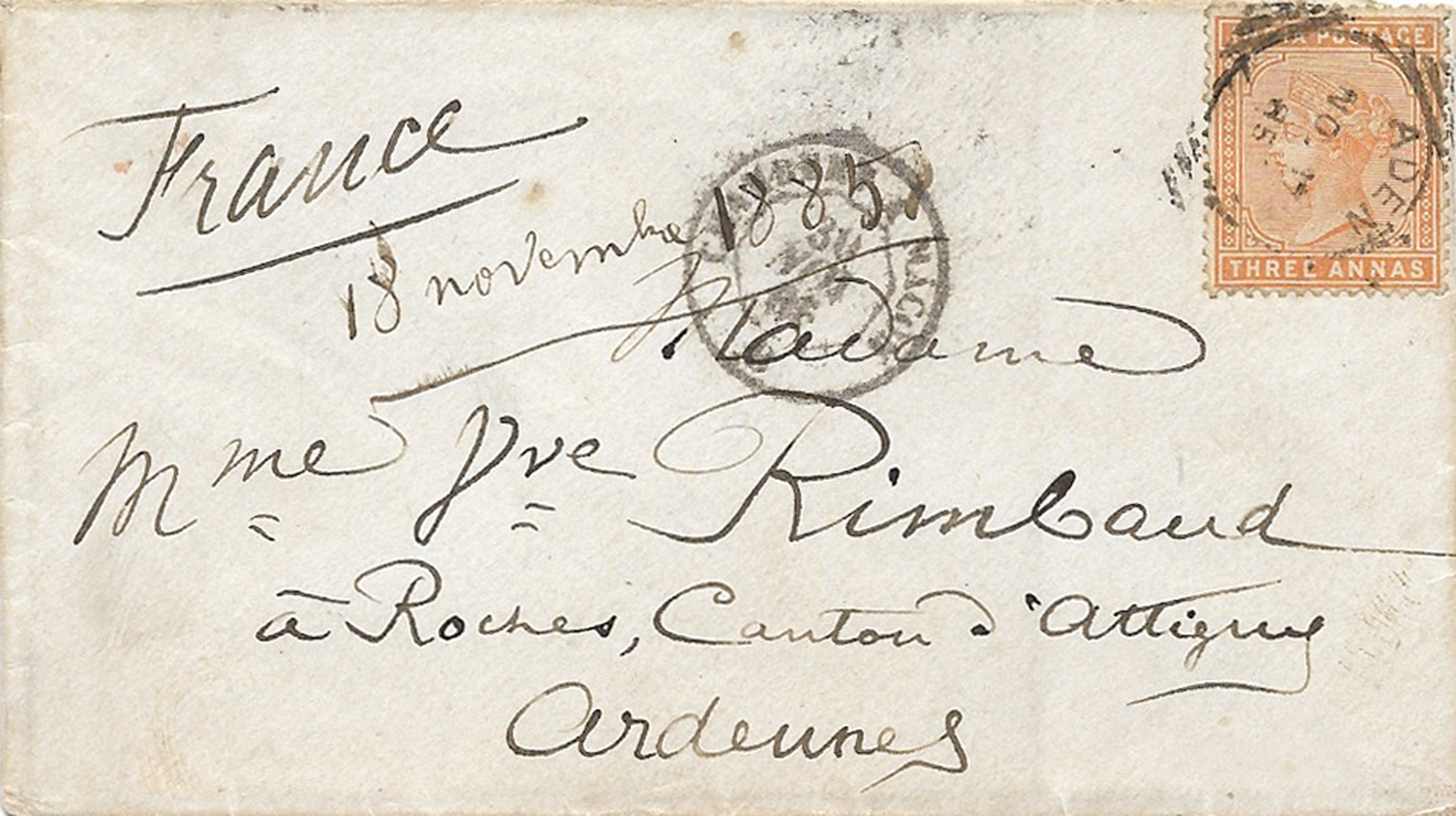
Fernande: 33 rpm vinyl record, inscribed « G. Brassens »
Paris, Oct. 1973, approx. 31 x 31 cm
« With the sincere friendship of the old bear… »
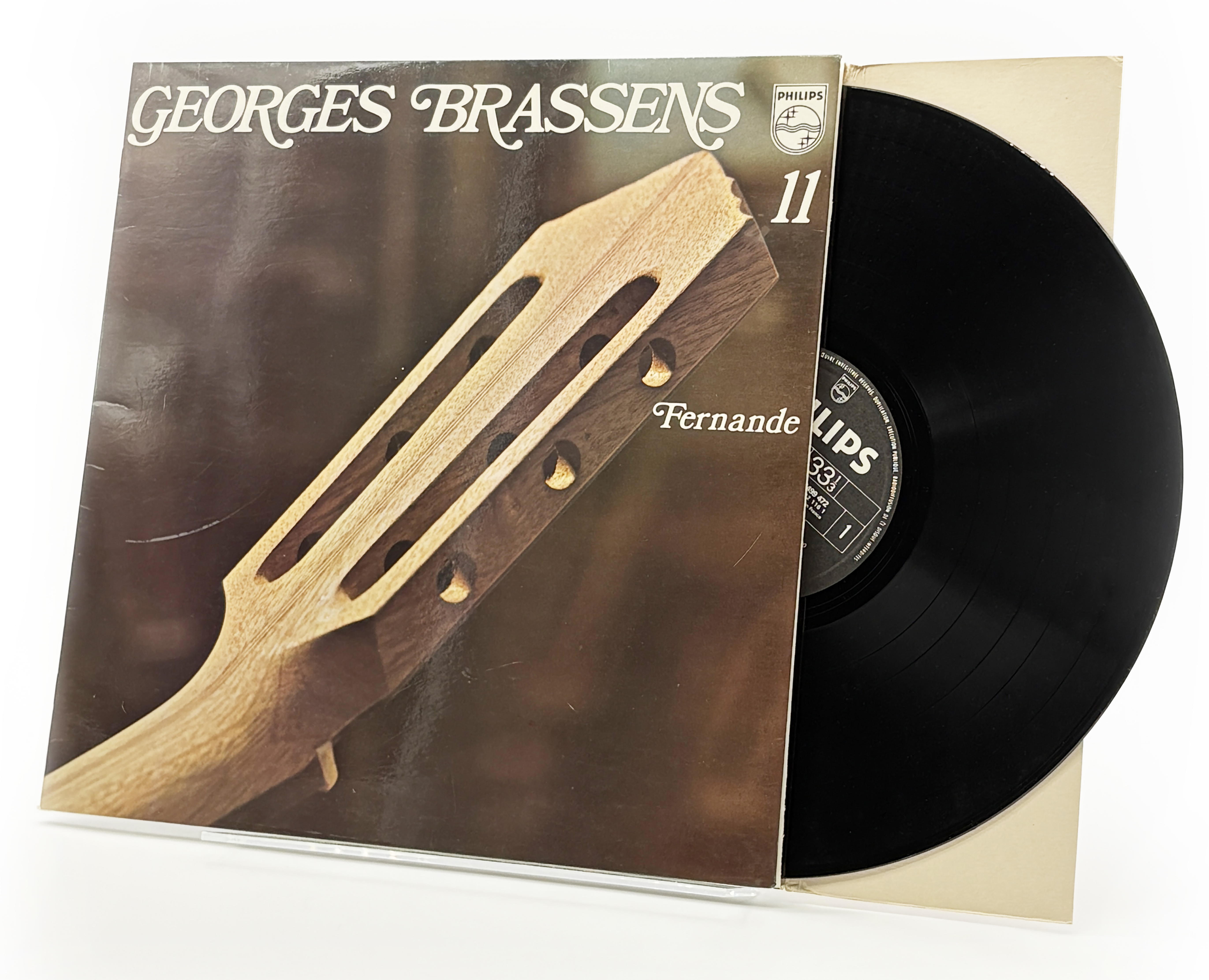
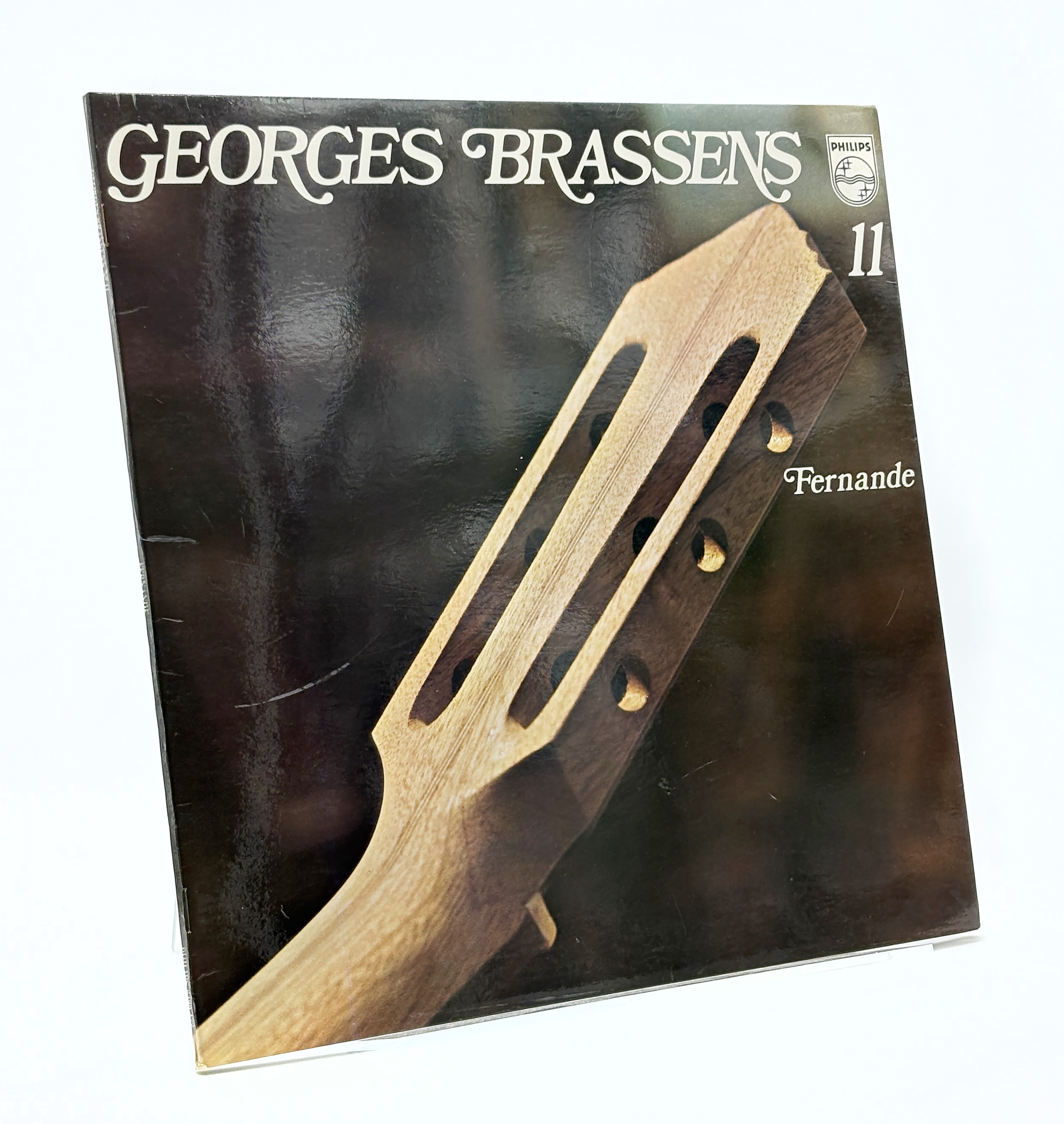
Fernande: 33 rpm vinyl record, inscribed « G. Brassens »
Paris, Oct. 1973, approx. 31 x 31 cm
In perfect condition apart from slight lifting of the plastic — without consequence — on the title cover (see illustrative photographs)
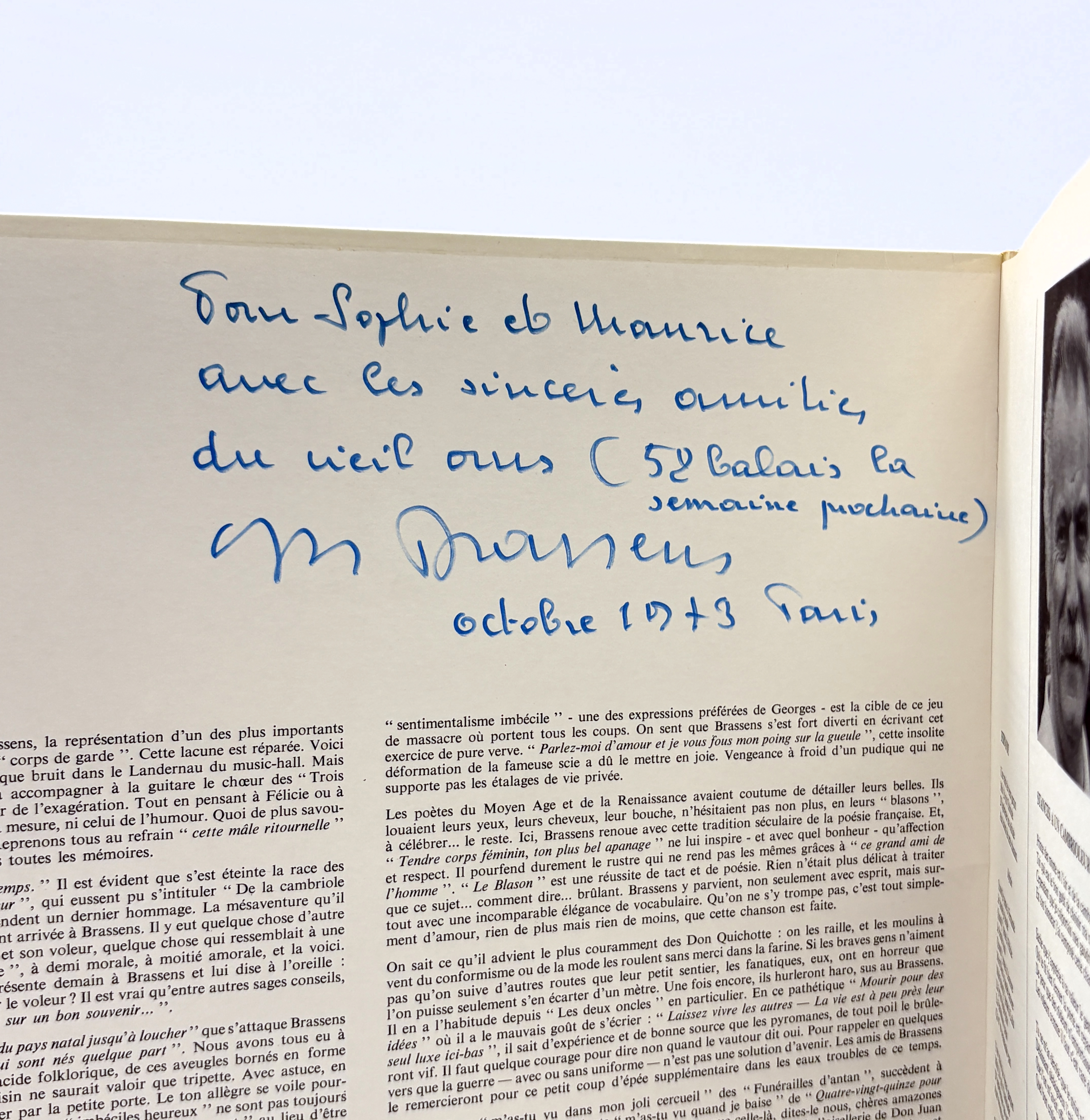
Fernande: a legendary album accompanied by a superb dedication from Brassens
Inside the sleeve, the artist writes these words to his housekeeper and her husband:
« Pour Sophie et Maurice / avec les sincères amitiés / du vieil ours (52 balais la semaine prochaine) / G Brassens / octobre 1973 Paris »
Released in 1972, Fernande is Brassens’s thirteenth album published in France. Its success was such that the album was certified gold in 1976 for 100,000 copies sold and platinum in 1980 for 400,000 copies sold. This record appears as a work of synthesis, where social satire, reflections on commitment, and a lucid examination of human relationships intertwine. Apart from the eponymous song « Fernande », some of the most emblematic titles by the poet from Sète are featured, such as « La Ballade des gens qui sont nés quelque part », « Le Blason », or « Mourir pour ses idées ».
Provenance: Estate of Sophie Duvernoy (1930–2025)
A discreet yet essential figure within Georges Brassens’s inner circle, Sophie Duvernoy entered his service in 1969 after having worked for the illustrator Raymond Peynet. She referred to Brassens as “the good master” (le bon maître), a nickname he himself had mischievously suggested when they first met. Born in Poland and nine years younger than the singer-songwriter, she was recruited almost by chance when Peynet moved to the South of France. At the time, Brassens was living in the Le Méridien building on Rue Émile-Dubois, alongside neighbours and friends such as Jacques Brel. Sophie subsequently accompanied Brassens when he moved to Rue Santos-Dumont, quickly becoming a stable presence within an environment shaped by the constant visits of friends and figures from the artistic world. A relationship grounded in trust and mutual understanding gradually emerged between these two reserved personalities. At the heart of this domestic space, which had become a place of artistic creation, Sophie Duvernoy assumed a central role, ensuring the conditions necessary for the work of the poet from Sète. Guardian of silence, manager of household affairs, and intermediary with the outside world, she moved in close proximity to Brassens’s creative process without ever disturbing its equilibrium. Her closeness to the artist also found expression in a limited direct participation in his work. She joined the chœur des copains alongside, among others, Claudine Caillart, Fred Mella, Joël Favreau, Pierre Nicolas, and André Tavernier, contributing backing vocals to two songs: “Tempête dans un bénitier” and “Le Roi.” Following the death of her “good master,” she lived in an apartment purchased by Brassens, who had guaranteed her lifetime use of it — a testament to the singular place she occupied both in his daily life and in the immediate orbit of his artistic creation.
Join our mailing list and be the first to hear our latest news and biggest announcements.
By signing up you agree to our privacy policy. You can unsubscribe at any time.