Keep ahead of the pack
Join our mailing list and be the first to hear our latest news and biggest announcements.
By signing up you agree to our privacy policy. You can unsubscribe at any time.
Autograph manuscript, signed, of the dedicatory epistle for El Cardenal de Belén
N.p. [Madrid?] n.d. [August 1610].
Exceptional rediscovery of the dedicatory epistle to El Cardenal de Belén, a hagiographic comedy devoted to Saint Jerome
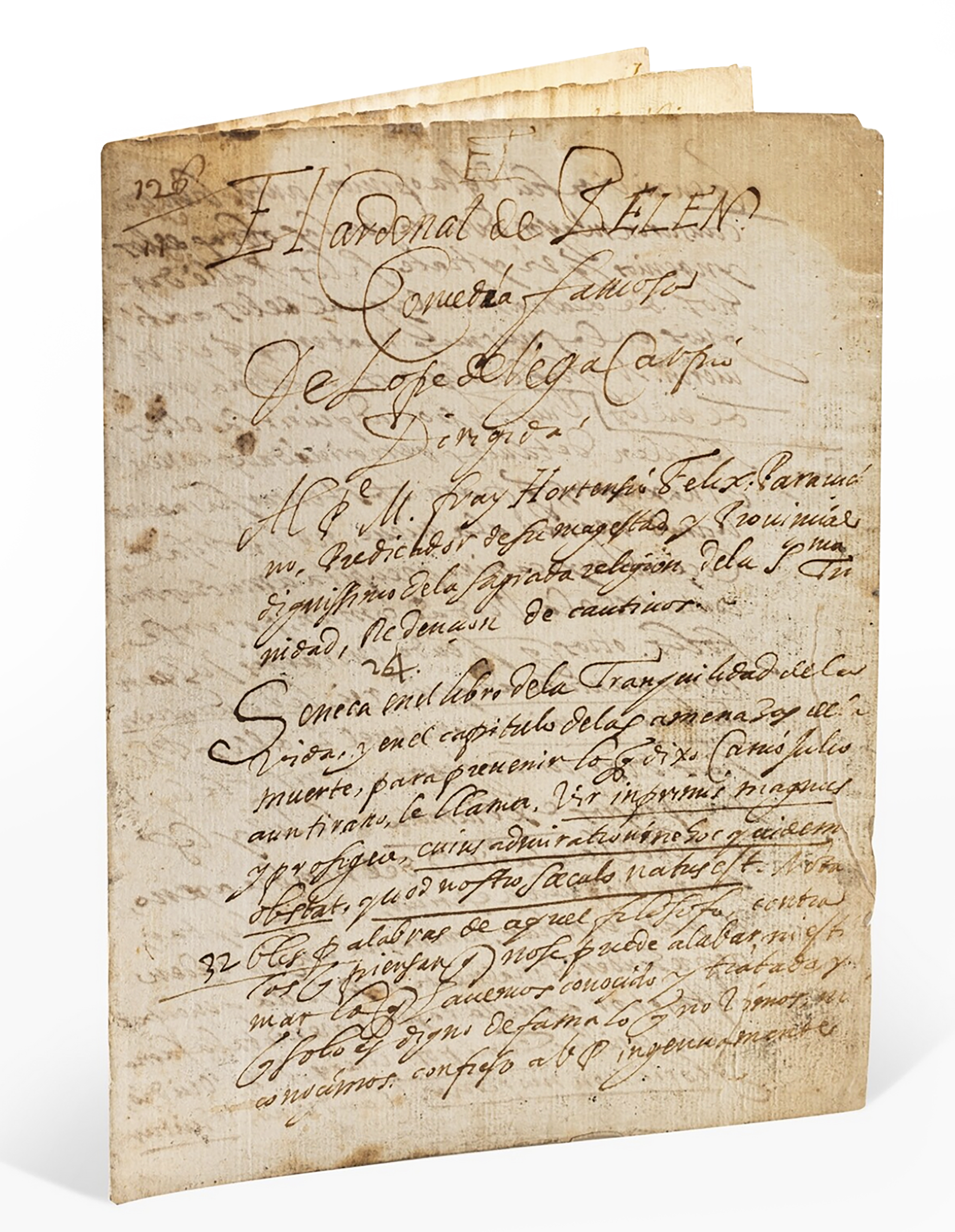
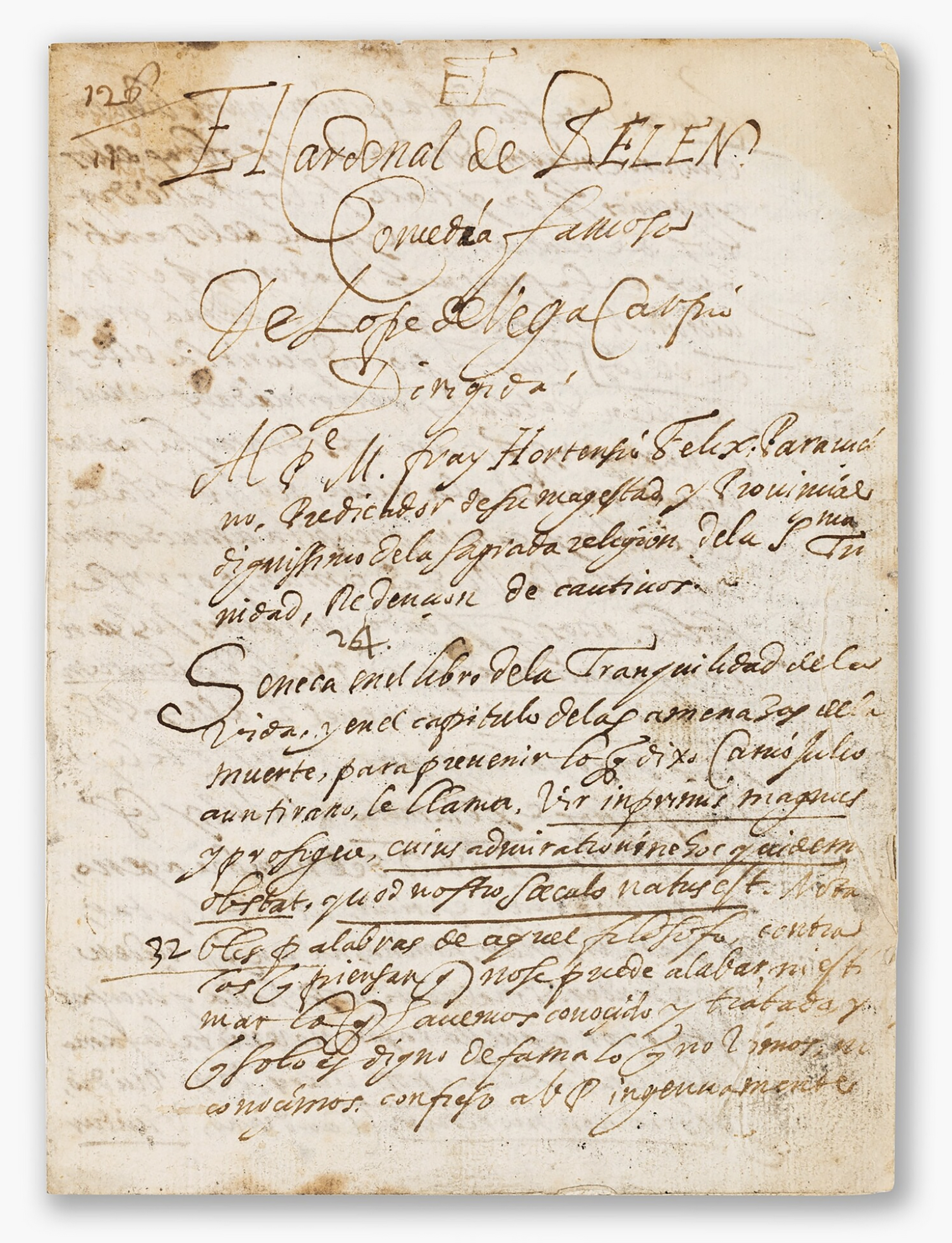
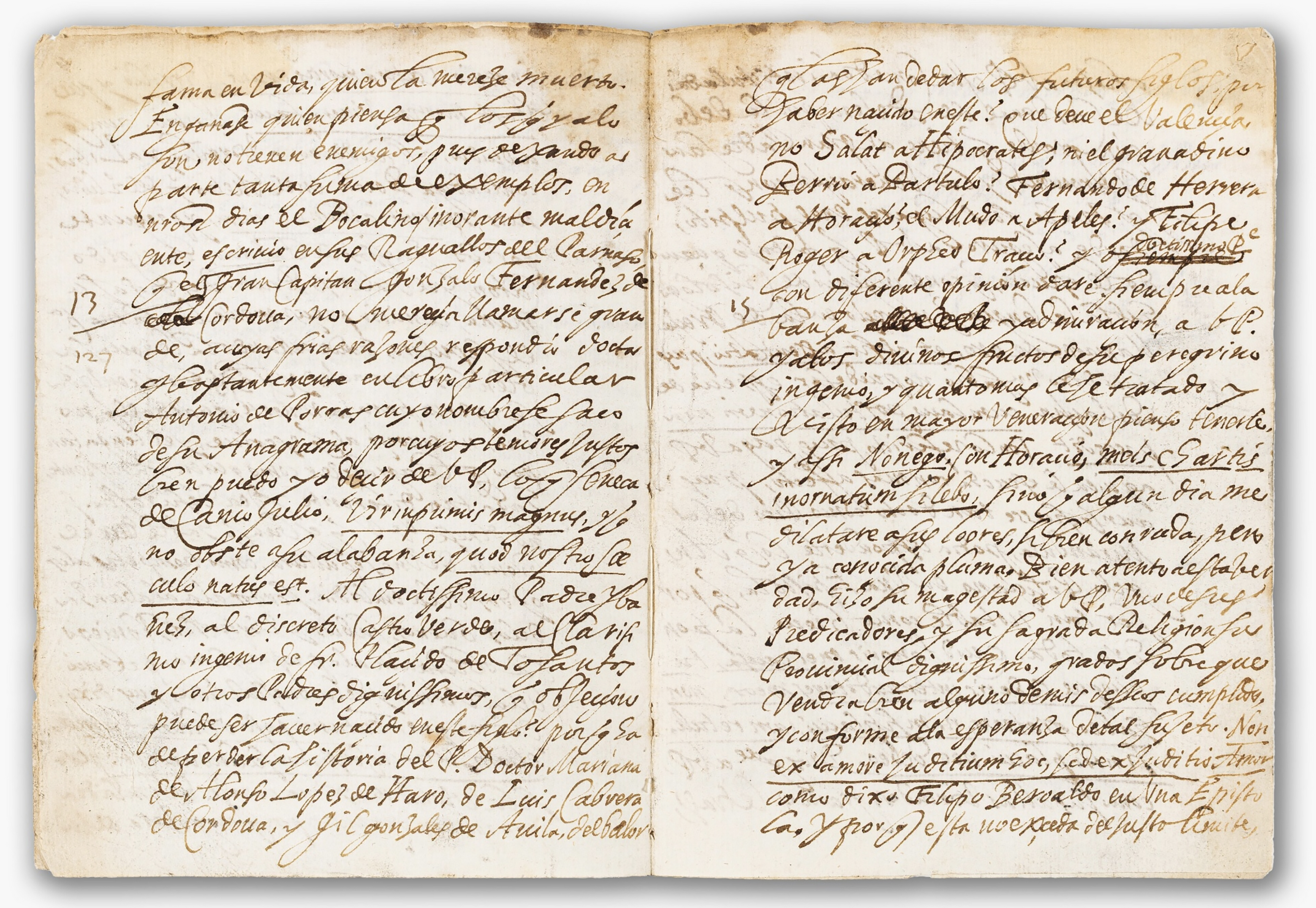
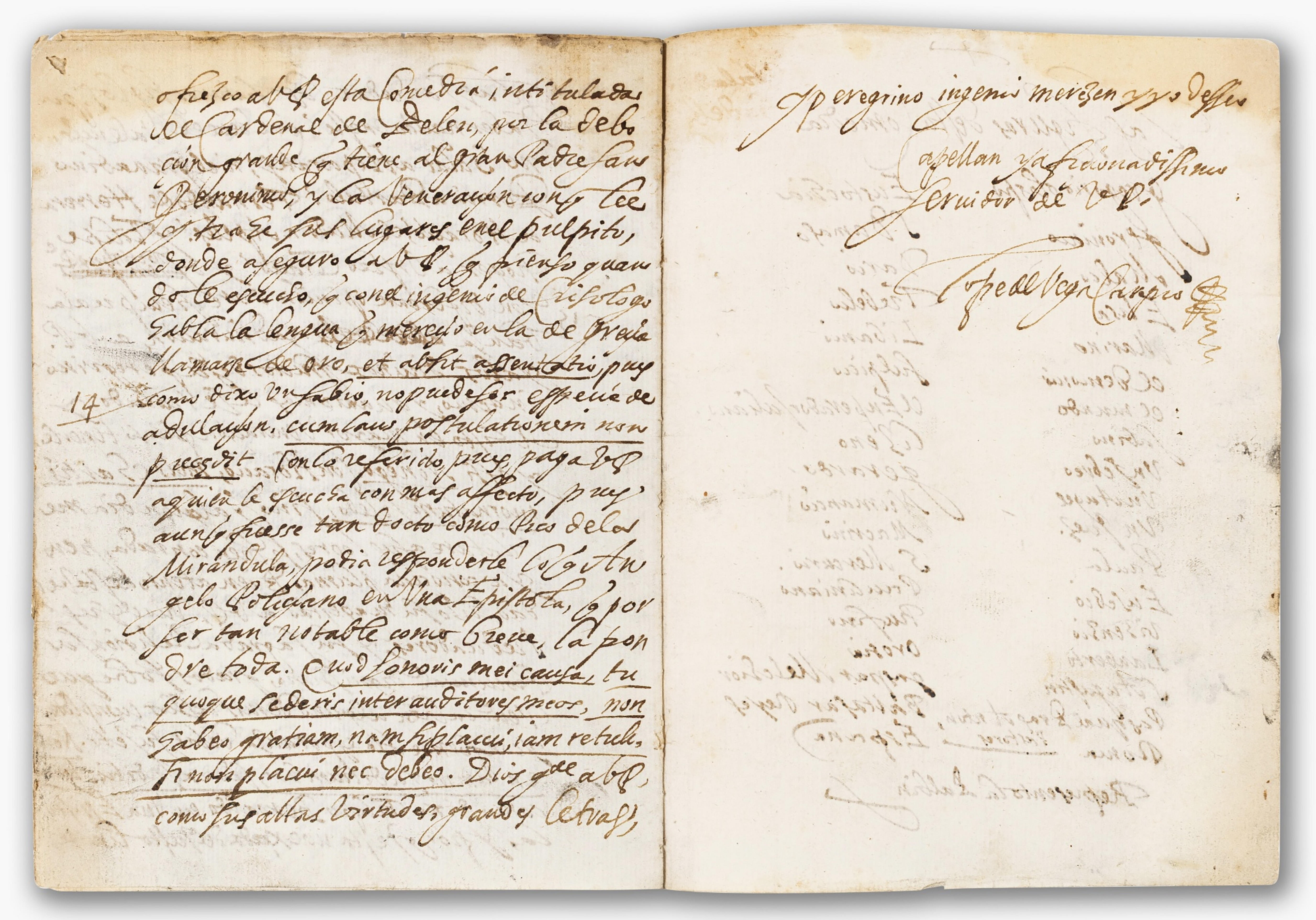
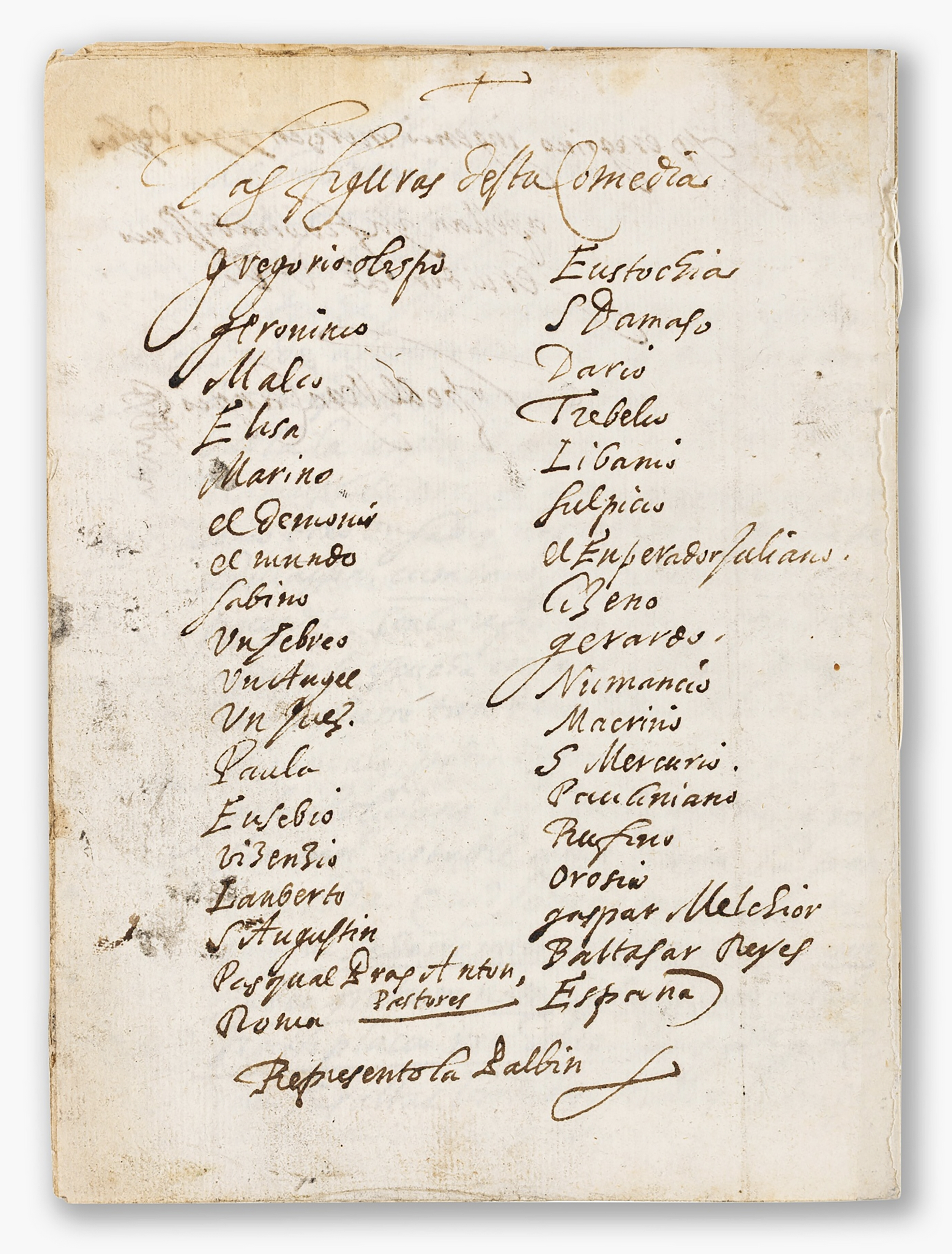
Autograph manuscript, signed, of the dedicatory epistle to Hortensio Félix Paravicino y Arteaga, for El Cardenal de Belén
N.p. [Madrid?] n.d. [August 1610]
7¼ pages, in-8 (207 × 151 mm), on four laid-paper leaves sewn at the centre, in brown ink.
Exceptional rediscovery of the dedicatory epistle to El Cardenal de Belén, a hagiographic comedy devoted to Saint Jerome
One of the exceedingly rare autograph relics of Lope de Vega still in private hands
The embodiment of the dramatic genius of the Spanish Golden Age and founder of the Comedia nueva, Lope de Vega was dubbed “the Phoenix” and the “monster of nature” by his contemporary Miguel de Cervantes, on account of the extraordinary fecundity of his output
The play El Cardenal de Belén portrays Saint Jerome, associated with the title of “cardinal of Bethlehem,” dramatizing his life, conversion and asceticism, setting worldly temptations against the ideal of Christian renunciation. Lope de Vega thus extols the sanctity, erudition and spiritual struggle of his character, in a style characteristic of the religious theatre of the Golden Age. Here he composes a dedicatory epistle in keeping with his practice, inaugurated precisely with the Parte XIII, whereby each of his comedies was dedicated to a different personality of the age.
For El Cardenal de Belén, “the Phoenix” addresses his friend Hortensio Félix Paravicino y Arteaga, orator and royal preacher appointed by Philip III of Spain in 1617, a leading figure of Madrid’s cultural elite.
Paravicino was immortalised by El Greco in a celebrated portrait, now held at the Museum of Fine Arts, Boston.
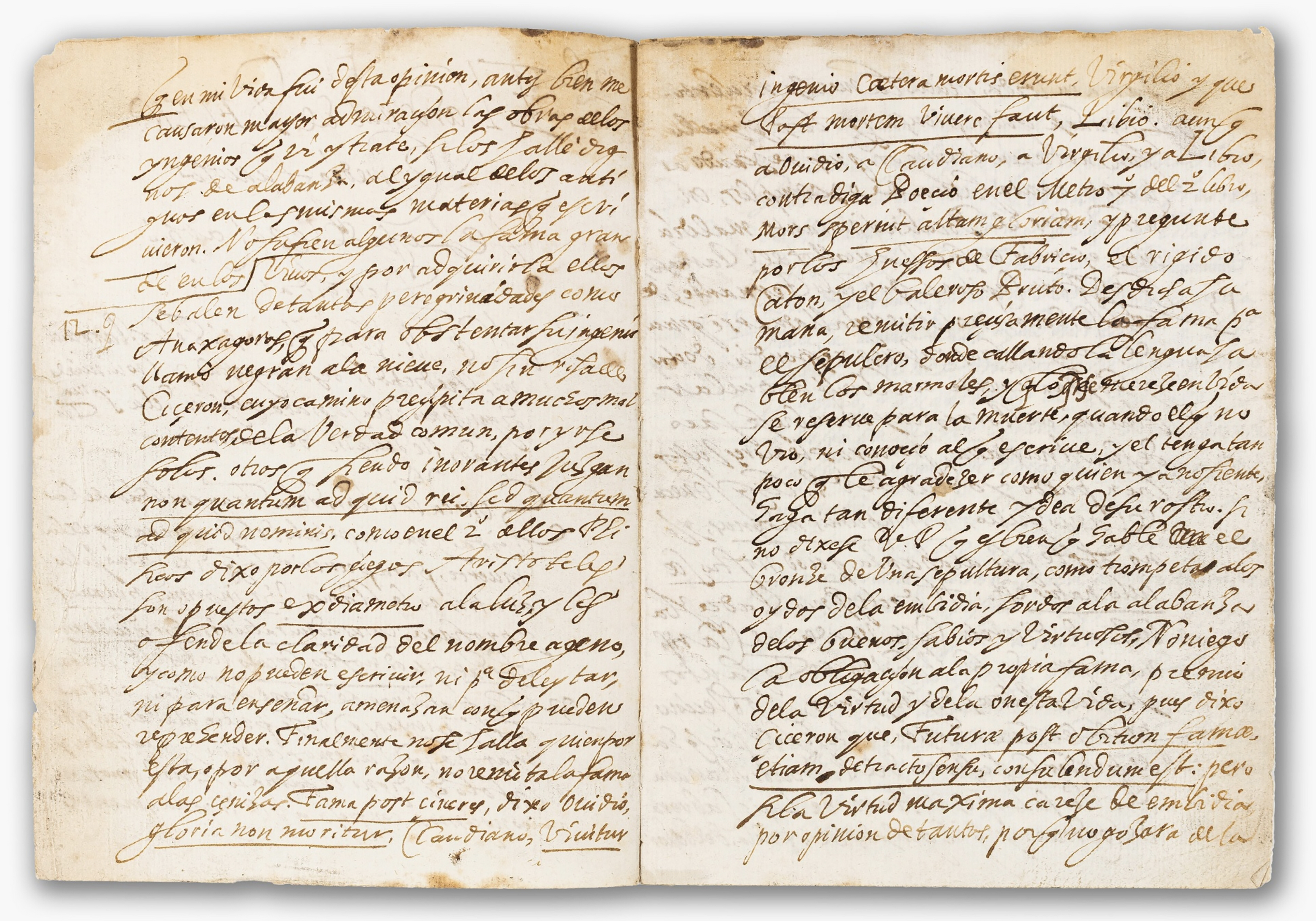
Reflections on the glory of the living and their posterity: Lope de Vega summons the philosophical authorities of Roman Antiquity in a sweeping display of erudition. Opposed to a persistent tradition that reserves glory for posterity, the playwright draws on the authority of the Ancients to challenge the notion that only posthumous fame has value, denouncing it here as a human misfortune, the “desdicha humana.” He thus strives to prove that admiration can and should be extended to one’s contemporaries, as expressed in Seneca’s Latin formula: “A man great among the greatest […] whose admiration is not diminished by the fact that he was born in our own age” (“vir in primis magnus […] cuius admiratione […] non obstat, quod nostro saeculo natus est“). This stance also reflects on Lope de Vega himself, who here ostentatiously displays the breadth of his own erudition. Drawing maxims and Latin quotations from manuals of learning to sustain an elitist discourse, the playwright thus asserts the superiority of his talent over those who would remain blind to his genius. He closes his epistle with a pointed eulogy of Paravicino, celebrating his oratorical talent and erudition, and justifying the dedication of his comedy, offered as a sincere tribute (“non ex amore iuditium hoc, sed ex iuditio amor“) to a man whose virtues deserve to be recognised in his own lifetime.
Founder of the Comedia nueva, or Spanish-style tragicomedy, the very matrix of popular theatre in the Golden Age, Lope de Vega owes his posterity to the exceptional scope and diversity of his output. As much admired as envied by his peers, he left behind a prodigious corpus comprising some 1,800 secular plays, 400 religious dramas, 3,000 sonnets, 9 epics and numerous novels and interludes, spanning every register and exploring a wide variety of literary themes. His manuscripts are nonetheless exceedingly rare in private hands.
His comedies, which he began having printed by his publisher Alonso Martín as early as 1604, were issued in twenty-five separate editions (Partes), the last of which appeared more than ten years after his death, in 1647.
For El Cardenal de Belén, Alonso Martín having died before 1620, it was his widow, Francisca Medina, who oversaw the publication of the Parte XIII, with funding from Alonso Pérez, a Madrid bookseller-publisher.
A friend of Francisco de Quevedo and Juan Ruiz de Alarcón, Lope was also the target of envious rivals, among them Luis de Góngora and Cervantes, underscoring just how far his influence and prestige extended beyond the bounds of his own time. The vigour, inventiveness and erudition of his theatre continue to inspire academic study, affirming his place as a towering figure in Spanish literature and a model for playwrights of the centuries that followed.
Lope de Vega’s involvement in the publication of his comedies from the Partes IX-XIII onward.
The comparison between the fair copy of this dedicatory epistle and its first publication in the Parte XIII is striking. This parallel makes it possible to grasp the particular care with which Lope de Vega oversaw the publication of his work, a concern that began as early as 1617 with the Parte IX. In the critical apparatus devoted to the “Phoenix’s” deferential epigraph to his friend Paravicino, Marco Presotto demonstrates, drawing on a copy of the first edition (Madrid, por la viuda de Alonso Martín, a costa de Alonso Pérez, 1620, based on the copy held at the Biblioteca Histórica de la Universidad Complutense de Madrid), the printer’s strict adherence to the layout chosen by the author in this manuscript. The title and the short prefatory text are the most striking examples of this, with every line break scrupulously observed, down to reproducing the line break in the word “trinidad,” split after its first syllable in the manuscript. Another striking example lies in the list of characters in the play, “Las figuras desta Comedia”: set out in two columns on the last page of the manuscript, it is reproduced identically in the printed edition.
Marco Presotto also notes that the printed edition reproduces two typographical errors, perhaps arising from the playwright’s highly distinctive handwriting. Thus the misreading of the pronoun “lo” turns it into “la” in the Parte; on the same page, in similar fashion, “y que solo es digno de fama lo que no vimos” becomes “y lo que solo es digno de fama lo que no vimos.”
Transcription:
« El cardenal de Belén.
Comedia famosa
de Lope de Vega Carpio
Dirigida
Al Padre Maestro Fray Hortensio Félix Paravicino, Predicador de Su Majestad y Provincial dignísimo de la Sagrada Religión de la Santísima Trinidad, redención de cautivos.
Séneca, en el Libro de la tranquilidad de la vida, y en el capítulo de las amenazas de la muerte, para prevenir lo que dijo Canio Julio a un tirano, le llama ‘vir in primis magnus’, y prosigue, ‘cuius admiration ne hoc quidem obstat, quod nostro saeculo natus est’. Notables palabras de aquel filósofo, contra los que piensan que no se puede alabar ni estimar lo que habemos conocido y tratado, y que solo es digno de fama lo que no vimos ni conocimos. Confieso a V. P. ingenuamente [f. 1v] que en mi vida fui desta opinión, antes bien me causaron mayor admiración las obras de los ingenios que vi y traté, si los hallé dignos de alabanza, al igual de los antiguos en las mismas materias que escribieron. No sufren algunos la fama grande en los vivos, y por adquirirla ellos se valen de tantas peregrin dades como Anaxágoras, que para obstentar su ingenio llamó negra a la nieve, no sin risa de Cicerón, cuyo camino precipita a muchos mal contentos de la verdad común, por irse solos. Otros que, siendo inorantes, juzgan ‘non quantum ad quid rei, sed quantum ad quid nominis’ como en el 2° de los Phísicos dijo por los ciegos Aristóteles, son opuestos ‘ex diametro’a la luz, y les ofende la claridad del nombre ajeno, y como no pueden escribir, ni para deleitar ni para enseñar, amenazan con que pueden reprehender. Finalmente, no se halla quien por esta, o por aquella razón, no remita la fama a las cenizas. ‘Fama post cineres’, dijo Ovidio,
‘Gloria non moritur’, Claudiano, ‘Vivitur ingenio caetera mortis erunt’, Virgilio y que ‘Post mortem vivere facit’, Livio. Aunque a Ovidio, a Claudiano, a Virgilio, y a Livio contradiga Boecio en el metro 7° del 2° libro, ‘mors spernit altam gloriam’, y pregunte por los huesos de Fabricio el rígido Catón y el valeroso Bruto.
Desdicha humana, remitir precisamente la fama para el sepulcro, donde callando la lengua hablen los mármoles, y lo merece en vida se reserve para la muerte, cuando el que no vio ni conoció al que escribe, y él tenga tan poco que le agradecer como quien ya no siente, haga tan diferente idea de su rostro. Si no dijese V. P. que es bien que hable el bronce de una sepultura, como trom- peta a los oídos de la envidia, sordos a la alabanza de los buenos, sabios y virtuosos. No niego la obligación a la propia fama premio de la virtud y de la honesta vida, pues dijo Cicerón que, ‘futurae post obitum famae, etiam, detracto sensu, consulendum est’ : pero si la virtud máxima carece de envidia por opinión de tantos, ¿por qué no gozará de la fama en vida quien la merece muerto? Engáñase quien piensa que los que ya lo son no tienen enemigos, pues dejando aparte tanta suma de ejemplos, en nuestros días el Bocalino, ignorante maldiciente, escribió en sus Raguallos del Parnaso que el Gran Capitán Gonzalo Fernández de Córdoba no merecía llamarse grande, a cuyas frías razones respondió docta y bastantemente en libro particular Antonio de Porras, cuyo nombre se sacó de su anagrama, por cuyos temores justos bien puedo yo decir de V. P. lo que Séneca de Canio Julio, ‘vir in primis Magnus’, y que no obste a su alabanza, ‘quod nostro saeculo natus est’. Al doctísimo Padre Ibáñez, al discreto Castro Verde, al clarísimo ingenio de fray Plácido de Tosantos y otros padres dignísimos, ¿qué objeción puede ser haber nacido en este siglo? ¿Por qué ha de perder la historia del padre doctor Mariana, de Alonso López de Haro, de Luis Cabrera de Córdoba y Gil González de Ávila del valor que las han de dar los futuros siglos, por haber nacido en este? ¿Qué debe el valenciano Salat a Hipócrates, ni el granadino Berrio a Bártulo? ¿Fernando de Herrera a Horacio? ¿El Mudo a Apeles? ¿Y Felipe Roger a Orpheo tracio? Yo con diferente opinión daré siempre alabanza y admiración, a V. P. y a los divinos fructos47 de su peregrino ingenio, y cuanto más le he tratado y visto, en mayor veneración pienso tenerle, y así ‘non ego’, con Horacio, ‘meis chartis in ornatum silebo’, sino que algún día me dilataré a sus loores, si bien con ruda pero ya conocida pluma. Bien atento aesta verdad, hizo Su Majestad a V. P. uno de sus predicadores, y su sagrada religión su provincial dignísimo, grados sobre que vendrá bien alguno de mis deseos cumplido y conforme a la esperanza de tal sujeto. ‘Non ex amore iuditium hoc, sed ex iuditio amor’, como dijo Filipo Beroaldo en una epístola. Y porque esta no exceda del justo límite, ofrezco a V. P. esta comedia intitulada El cardenal de Belén, por la devoción grande que tiene al gran Padre San Jerónimo, y la veneración con que lee y trahe sus lugares en el púlpito, donde aseguro a V. P. que pienso, cuando le escucho, que con el ingenio de Crisólogo habla la lengua que mereció en la de Grecia llamarse de oro, ‘et absit assentatio’; pues, como dijo un sabio, no puede ser especie de adulación ‘cum laus postulationem non precedit’. Con lo referido, pues, paga V. P. a quien le escucha con más afecto, pues aunque fuese tan docto como Pico de la Mirándula, podía responderle lo que Ángelo Policiano en una epís- tola, que por ser tan notable como breve, la pondré toda. ‘Quod honoris mei causa, tu quoque sederis inter auditores meos, non habeo gratiam, nam si placui, iam retuli, si non placui nec debeo’. Dios guarde a V. P. como sus altas virtudes, grandes letras y peregrino ingenio merecen y yo deseo.
Capellán y aficionadísimo servidor de V. P.
Lope de Vega Carpio. »
Lot appraised by Le Manuscrit Français for the Sotheby’s Paris sale, Livres & Manuscrits, 17 June 2026 (no. 39)
Estimate: EUR 40.000 – 60.000
Hammer price (including fees): EUR 230.400
Provenance:
Francisca Medina; Benjamin Fillon (1819-1881); his sale, Charavay, 15 July 1878, series VII, no. 1431; private collection since 1878; by descent within the same family until 2018; purchased from the latter by the current owner in 2018.
Literature:
M. Presotto, « La dedicatoria autógrafa de Lope para la publicación de El cardenal de Belén« , Anuario Lope de Vega, Texto, literatura, cultura, XXVI (2020), p. 500-533 (copie de l’article disponible sur demande).
Join our mailing list and be the first to hear our latest news and biggest announcements.
By signing up you agree to our privacy policy. You can unsubscribe at any time.