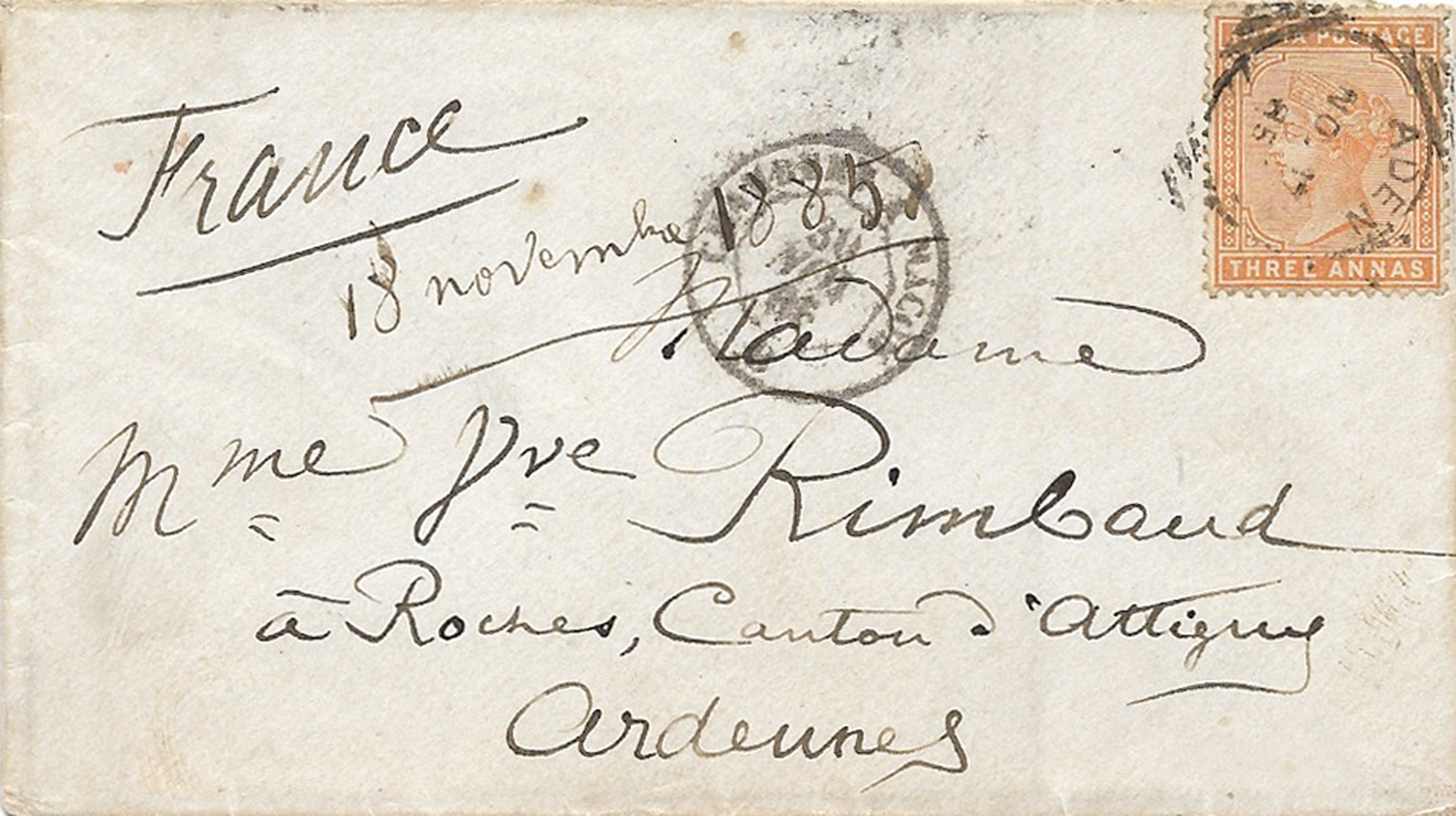
[BALZAC] ZOLA, Émile (1840-1902)

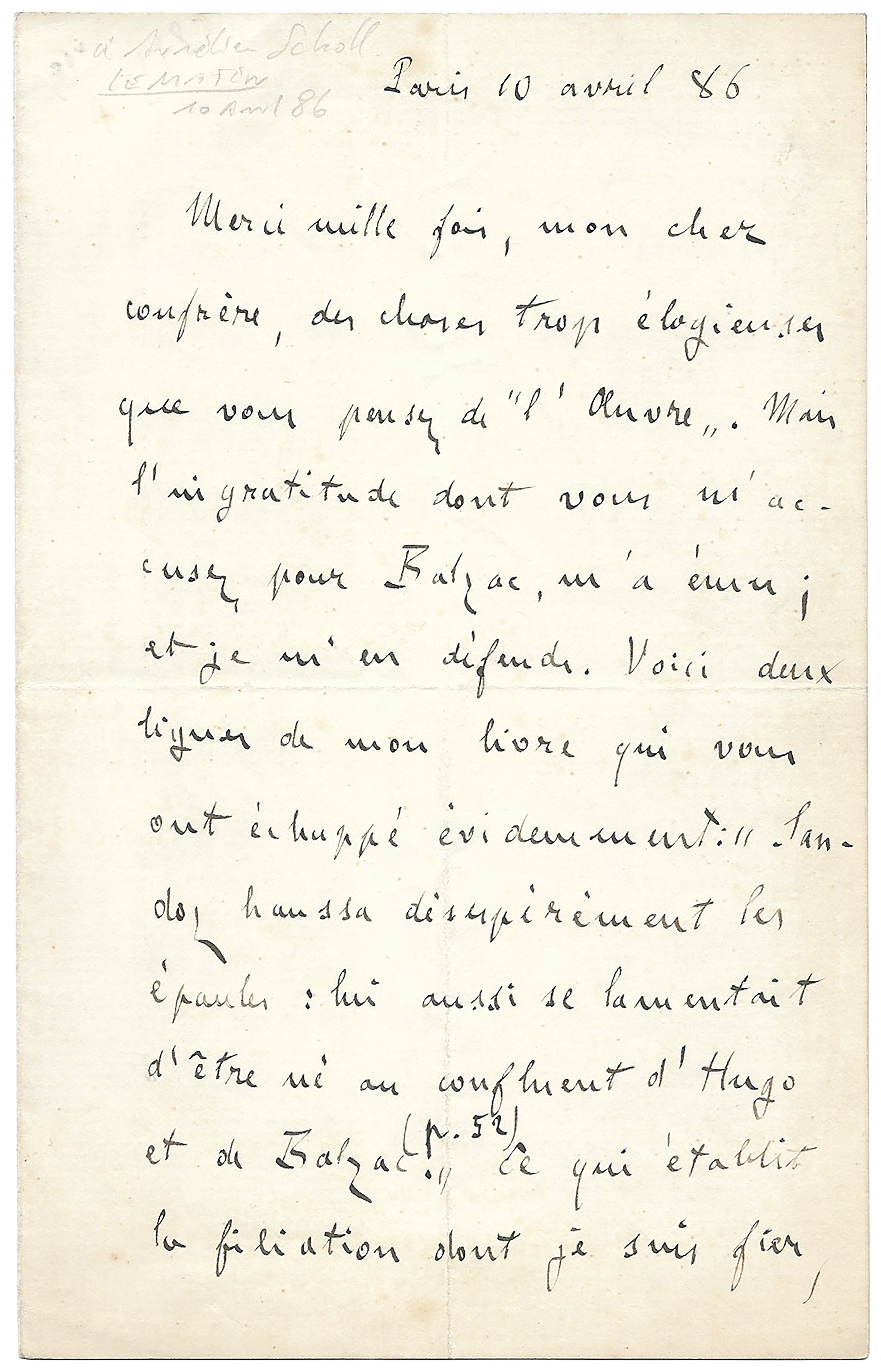
Autograph letter signed « Émile Zola » [to Aurélien Scholl]
Paris, 10 Apr. [18]86, 2 p. in-8°

« The ingratitude toward Balzac of which you accuse me has moved me; and I defend myself against it »
EUR 1.800 ,-
Fact sheet

[BALZAC] ZOLA, Émile (1840-1902)

Autograph letter signed « Émile Zola » [to Aurélien Scholl]
Paris, 10 Apr. [18]86, 2 p. in-8° in black ink
Minor spots of no significance, fold marks due to having originally been sent folded

Zola’s strong reaction, accused of failing to acknowledge his Balzacian heritage through Pierre Sandoz, his alter ego in L’Œuvre


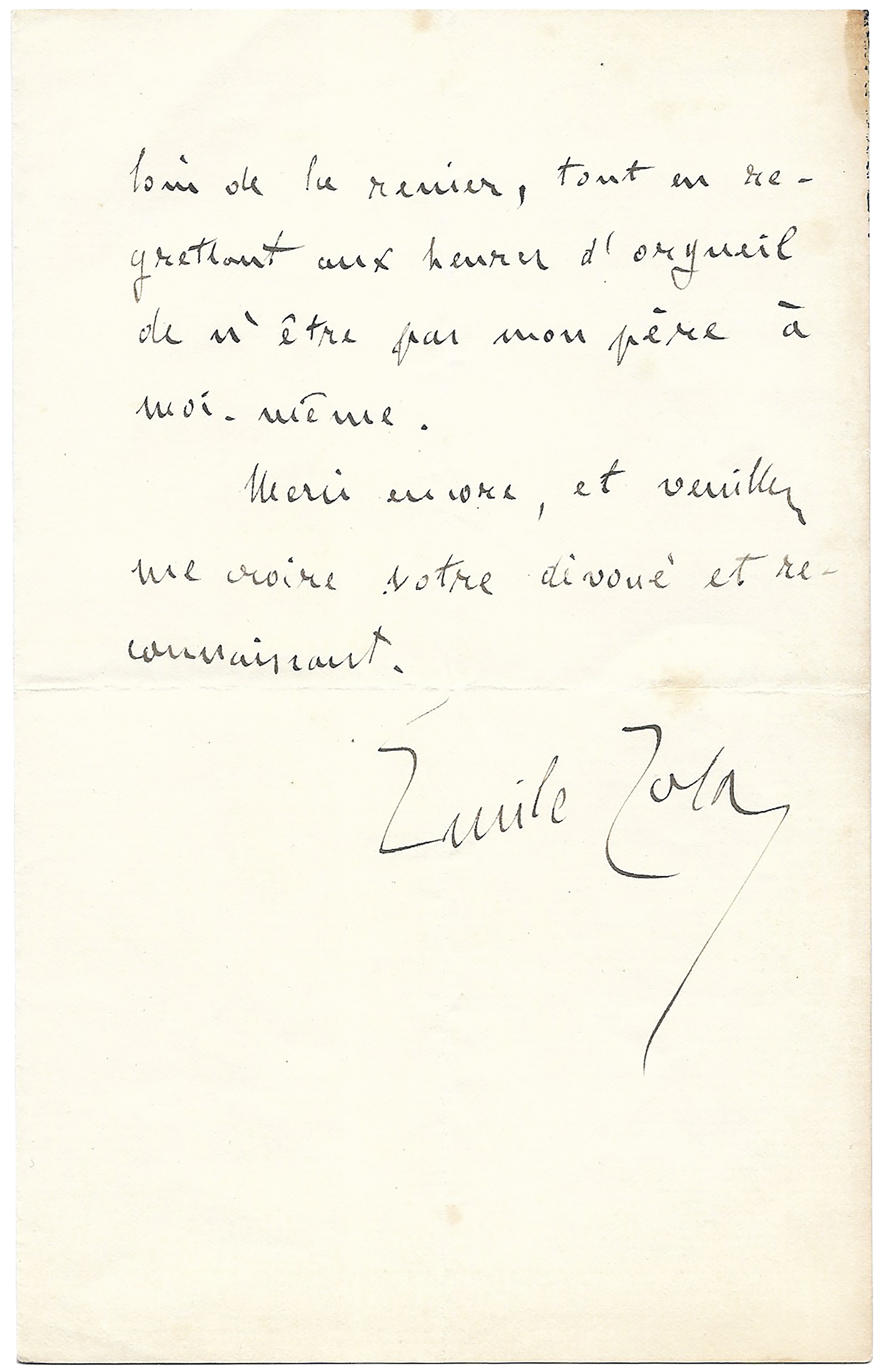
« Merci mille fois, mon cher confrère, des choses trop élogieuses que vous pensez de ‘l’Œuvre’. Mais l’ingratitude dont vous m’accusez pour Balzac, m’a ému ; et je m’en défends. Voici deux lignes de mon livre qui vous ont échappé évidemment : ‘Sandoz haussa désespérément les épaules : lui aussi se lamentait d’être ni au confluent d’Hugo et de Balzac’ (p. 52). Ce qui établit la filiation dont je suis fier, loin de la renier tout en regrettant aux heures d’orgueil de n’être pas mon père à moi-même.
Merci encore, et veuillez me croire votre dévoué et reconnaissant.
Émile Zola »


This letter is a response to an article in the daily newspaper Le Matin of 10 April, whose front page, written by Aurélien Scholl, is devoted to L’Œuvre, the fourteenth volume in the Rougon-Macquart series. The novel had appeared a few days earlier, on 31 March, after running for eighty installments in the Gil Blas, between 23 December 1885 and 27 March 1886.
The strong reactions the novel provoked are well known, particularly among the artist friends with whom the novelist had once shared a bohemian life in the Batignolles quarter. Two characters stand out in the novel, Claude Lantier and Pierre Sandoz. While the first is largely inspired by his friends Cézanne and Manet, Zola makes the second his alter ego in a very explicit way.
Initially laudatory in his article — “L’Œuvre is a fine book, the finest book Zola has written. In an elevated, superb language, vibrant with eloquence, the author has shown the artist grappling with his dream.” — Scholl delivers the finishing blow in a second stage, quoting the character Sandoz and thereby accusing the novelist of failing to acknowledge his Balzacian heritage, of which Zola had, moreover, never made any secret: “‘One must die to be proven right’ [an allusion to Claude Lantier’s suicide], says Sandoz in one of the finest pages of L’Œuvre. That is an opinion I cannot share. I well know that statues have been erected to people who were left to die of hunger […] Balzac, while alive, was able to enjoy his full share of glory, and Sandoz does not honor the dead Balzac with so much as a mention. Sandoz speaks repeatedly, with sincere enthusiasm, of his own colossal work, the history of a family under the Second Empire […] and he seems never to have heard of the Comédie humaine. And yet Balzac is dead. And I appeal to Sandoz himself: if Claude Lantier had not been a Rougon-Macquart, if he had been born in Orléans rather than in Plassans, in what way would his novel be altered? What detail would need to change?” Here Zola’s response takes on its full meaning…

Provenance:
Private collection

Unpublished letter

Keep ahead of the pack

Join our mailing list and be the first to hear our latest news and biggest announcements.

By signing up you agree to our privacy policy. You can unsubscribe at any time.