Keep ahead of the pack
Join our mailing list and be the first to hear our latest news and biggest announcements.
By signing up you agree to our privacy policy. You can unsubscribe at any time.
Autograph letter to President Hénault
N.p.n.d. [Versailles ? c. 1753], 2 p. in-4°, in brown ink on laid paper
« I have recently had a small figure of the infant Jesus painted, depicted reclining upon straw, as at the moment of his birth »
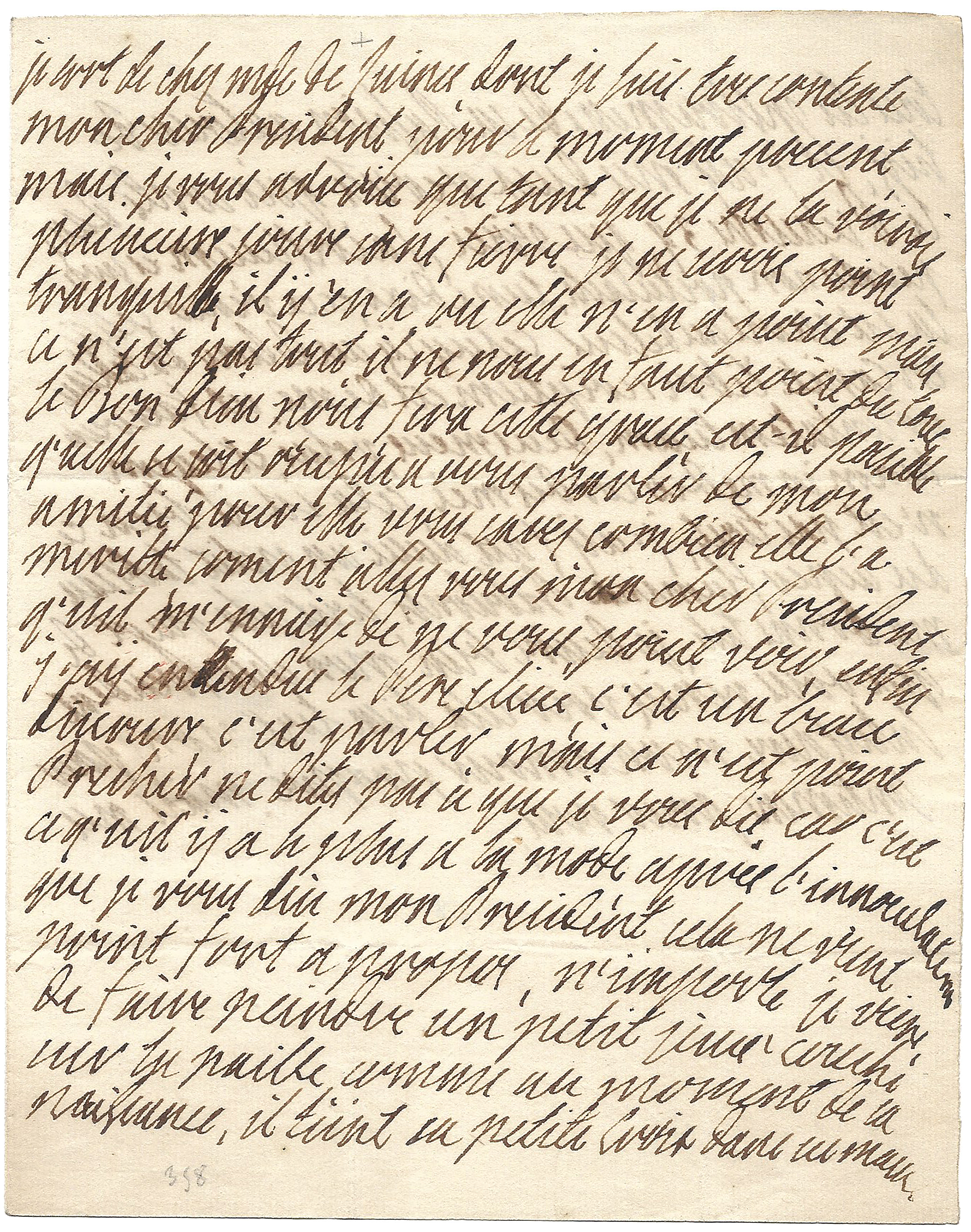
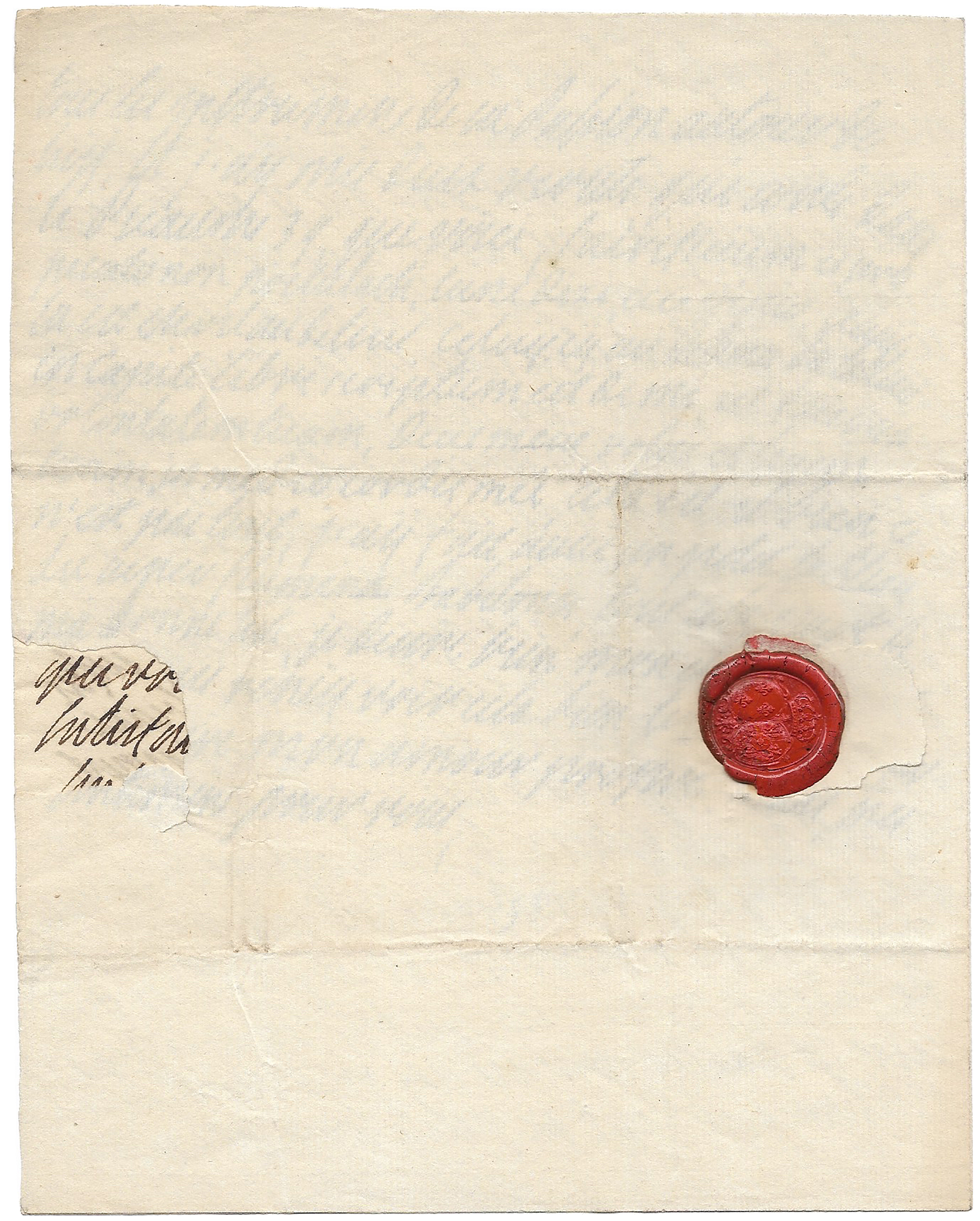
Autograph letter to Charles-Jean-François Hénault d’Armorezan, dit le « président Hénault »
N.p.n.d. [Versailles ? c. 1753], 2 p. in-4°, in brown ink on laid paper
Wax seal bearing the Queen’s arms, small restoration on central fold
Small loss with no damage to the text (fragment preserved at the opening of the seal).
Foliation “358” in pencil on the second page.
We have restored the punctuation.
Marie Leszczyńska and painting:
A long, partly unpublished letter, imbued with piety, concerning her activities as a painter
« Je sors de chez Mme de Luynes [Marie Brûlart de La Borde , sa première dame d’honneur] dont je suis très contente mon cher Président mais je vous avertis que tant que je ne la verrai plusieurs jours sans fièvre je ne serai point tranquille, il y en a où elle n’en a point mais ce n’est pas tout il ne nous en faut point du tout, le Bon Dieu nous fera cette grâce. Est-il possible qu’elle se soit occupé à vous parler de mon amitié pour elle, vous savez combien elle l’a méritée. Comment allez-vous mon cher Président. Qu’il m’ennuie de ne vous point voir, enfin j’ai entendu le Père Clieu [Gabriel-Mathieu d’Erchigny de Clieu ?], c’est un beau discours, c’est parler, mais ce n’est point prêcher. Ne dites pas ce que je vous dis car c’est ce qu’il y a le plus à la mode après l’inoculation que je vous dois, mon Président. Cela ne vient point fort à propos, n’importe je viens de faire peindre un petit jésus couché sur la paille, comme au moment de sa naissance. Il tient sa petite croix dans une main, tous les instruments de sa Passion autour de lui, et j’ai mis deux versets qui sont dans le Psaume 39, que voici [40 selon la numérotation hébraïque moderne, versets 8-9 de la Vulgate latine] : Sacrificium et pro peccato non postulasti; tunc dixi : ecce venio [Tu n’as pas réclamé de sacrifice ni d’offrande pour le péché ; alors j’ai dit : « Voici que je viens »], celui-là est écrit au-dessus, celui-ci au dehors du tableau : In capite libri scriptum est de me ut facerem voluntatem tuam, Deus meus, volui et legem tuam un medio cordis mei [Au commencement du livre, il est écrit de moi que je fasse ta volonté. Mon Dieu, je l’ai voulue, et ta loi est au milieu de mon cœur]. Cela est-il bien ? cela n’est pas tout, j’ai fait aussi un petit tableau du super flumina babylonis [il s’agit du psaume 137, l’un des 150 poèmes du livre des Psaumes dans la Bible]. Tout cela part de ma bonne tête. Je désire bien, mon cher Président, non pour satisfaire mon amour propre mais mes sentiments pour vous. »
Marie Leszczyńska received an education that included instruction in the arts d’agrément — the accomplishments customarily expected of young women of her rank. Following the example of her father, Stanisław Leszczyński, she was thus introduced to painting as an amateur practice. This activity did not, however, remain a mere passing pastime: having been exposed to the pictorial arts from an early age, the Queen maintained a close relationship with painting throughout her life, to the extent that she became one of the central figures in the artistic patronage of the court. Her daily surroundings bear witness to this attachment, as she chose to surround herself with portraits, landscapes, and religious compositions produced by the artists of her time, alongside her own works.
Président Hénault held a distinctive place within the entourage of Marie Leszczyńska, as a member of the small intimate circle that the Queen gathered around her — a group devoid of any political ambition and devoted, in the words of Michel Antoine, to nothing more than mutual companionship. It is within this framework of emotional closeness and trust that the abundant correspondence the Queen, a prolific letter-writer, addressed to Hénault should be situated. Though this relationship remained far removed from the great affairs of the kingdom, it attests to an enduring bond of trust, since Hénault was appointed in 1759 superintendent of the Queen’s household, a position he retained until her death in 1768. The Queen, moreover, presented him with her portrait executed by Nattier, a tangible mark of her esteem. This correspondence itself is characterized above all by its intimate tone, illustrating not so much the Queen’s involvement in public affairs as the depth of a lasting personal attachment to her confidant.
Provenance:
Formerly in the H.D. collection
Bibliography:
Lettres inédites de la reine Marie Leckzinska et de la duchesse de Luynes au Président Hénault, Victor des Diguères, éd. H. Champion, 1886, p. 46 (partially transcribed)
Join our mailing list and be the first to hear our latest news and biggest announcements.
By signing up you agree to our privacy policy. You can unsubscribe at any time.