Keep ahead of the pack
Join our mailing list and be the first to hear our latest news and biggest announcements.
By signing up you agree to our privacy policy. You can unsubscribe at any time.
Chansons pour elle
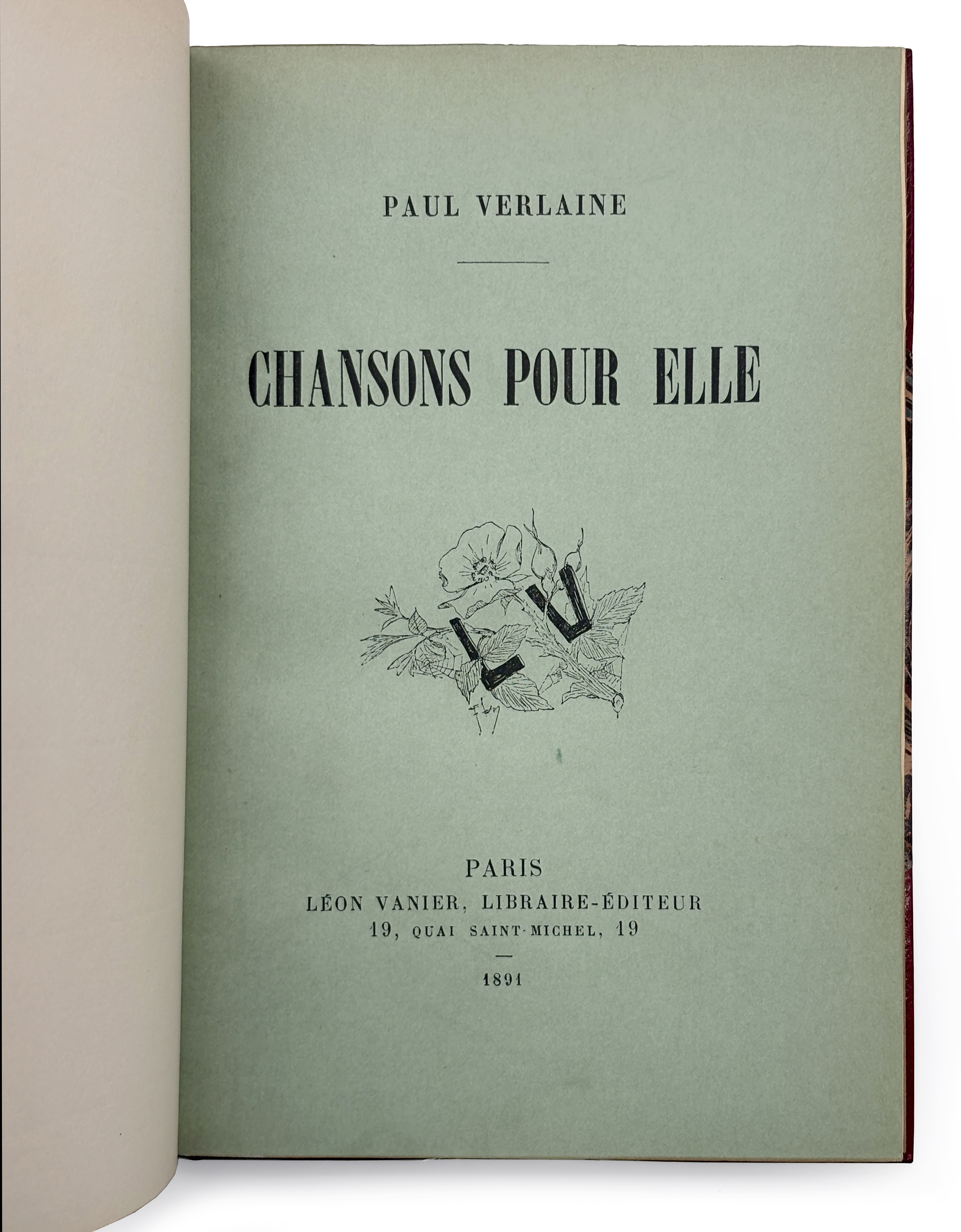
Paris, Léon Vanier, 1891, first edition
One of the rare copies on Japan paper, with an autograph poem
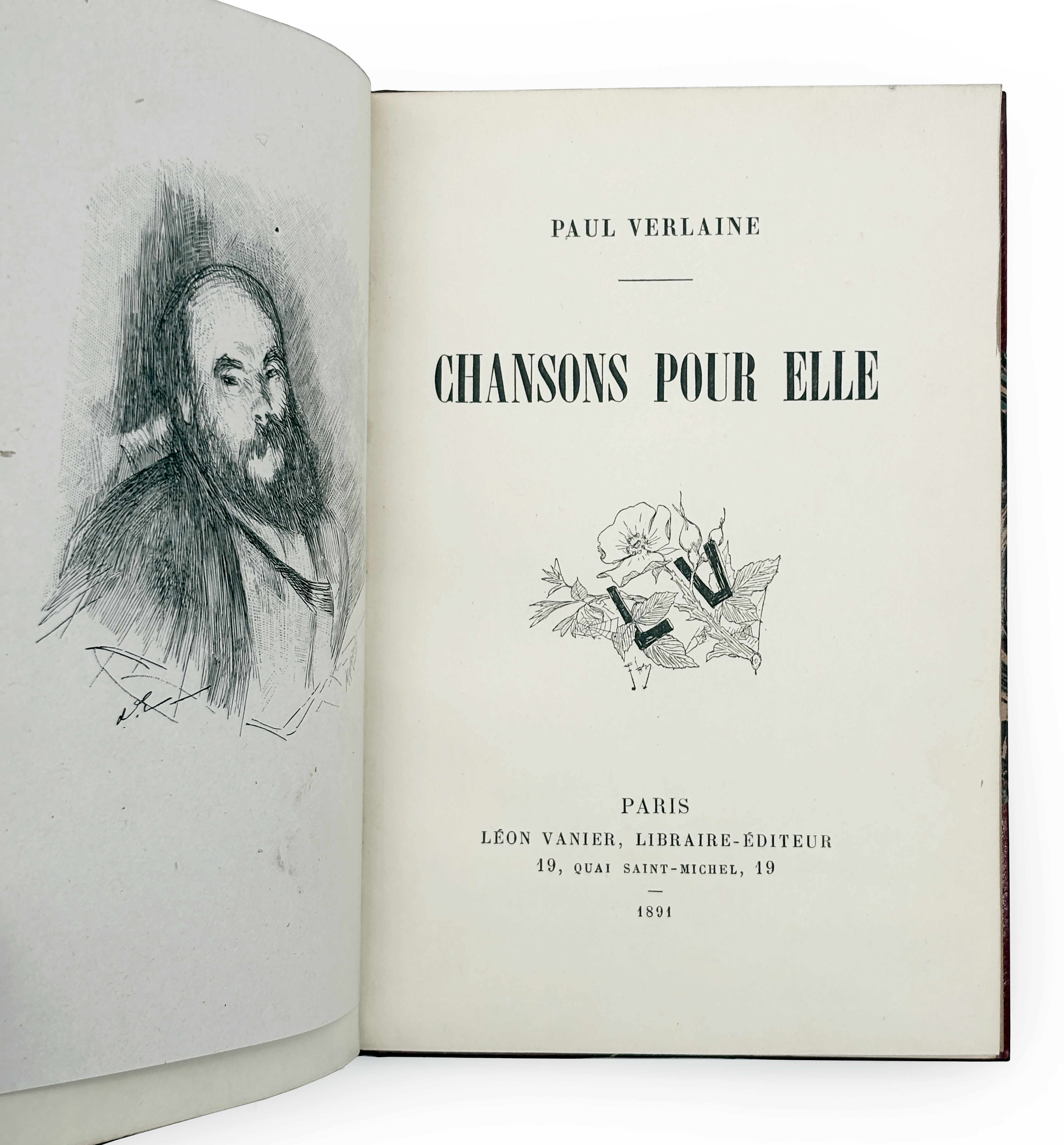
Chansons pour elle
Paris, Léon Vanier, 1891
First edition, one of the rare (25?) copies on Japan paper
in-12° (18.8 x 12.4 cm)
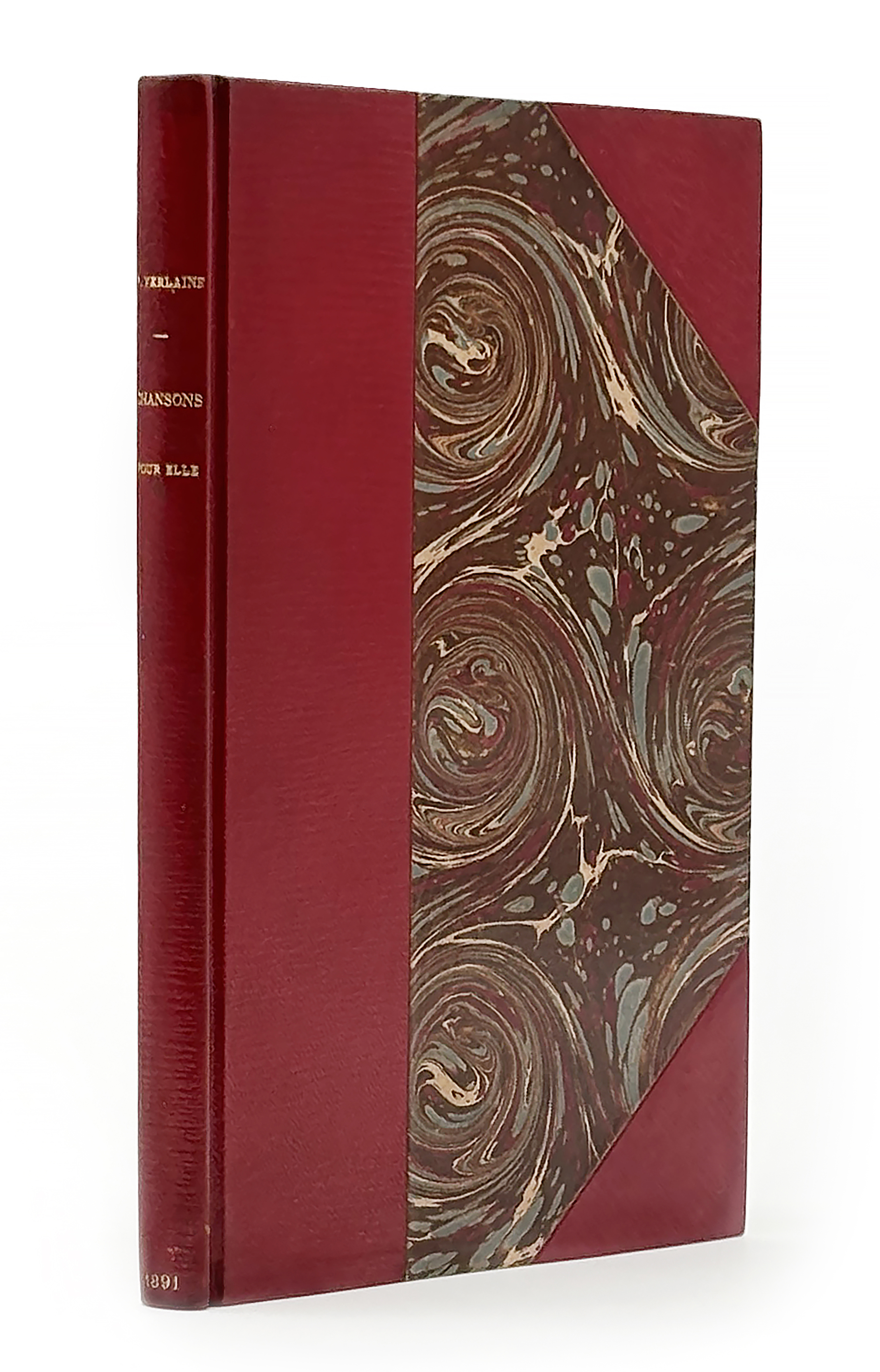
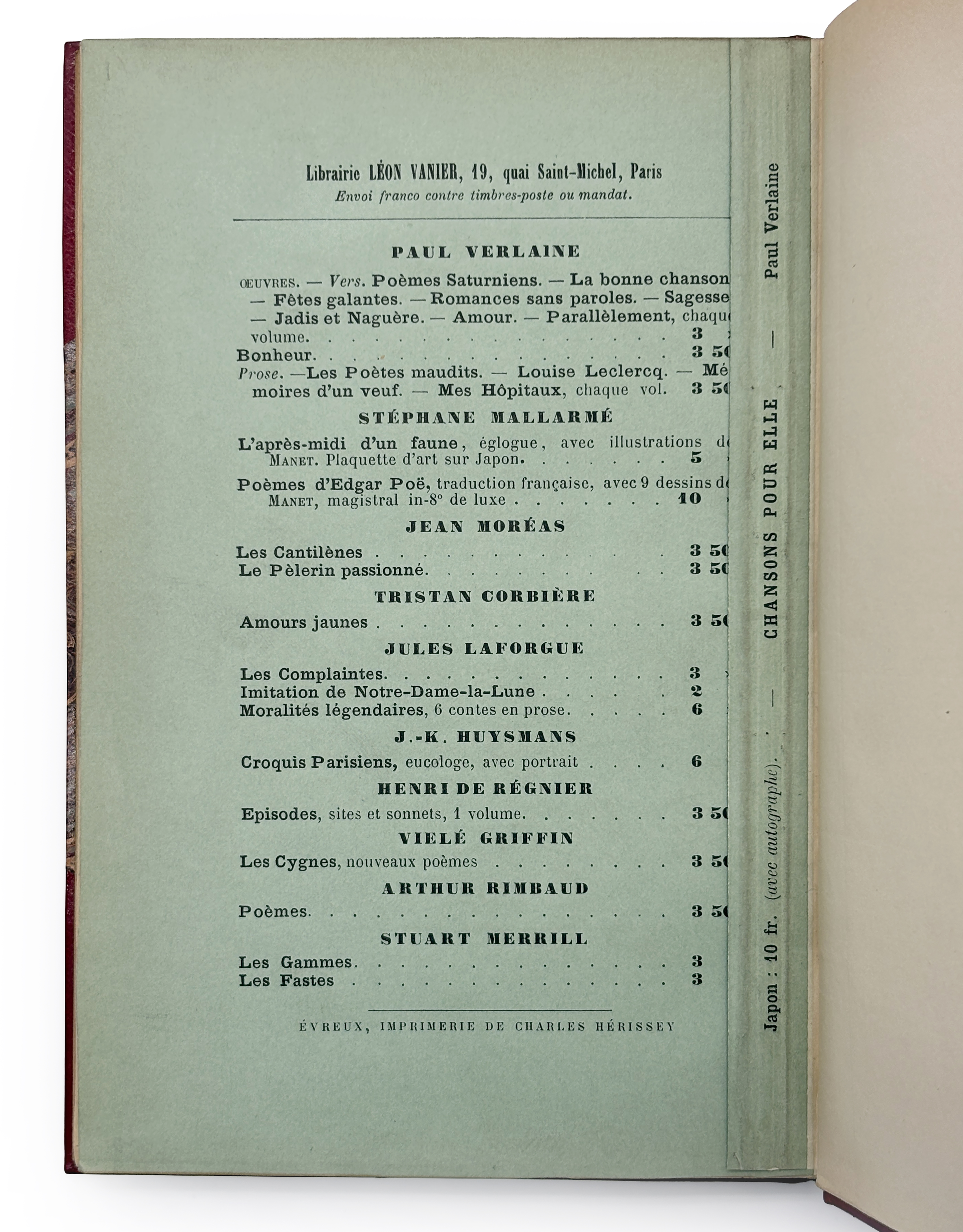
Contemporary binding by Carayon, bradel-style long-grained red half-morocco with corners, gilt top, original wrappers and spine bound in (tiny stains and slight signs of age)
Complete with its blue wrappers and spine (specific to the Japan paper issue) and the wood-engraved portrait of Verlaine by Mavrier (printed on China paper).
Carteret — Le Romantisme, vol. II, p. 430 ; Vicaire, vol. VII, p. 997 ; Montel, 75 / (2 l.)-52.
One of the rare copies on Japan paper of this collection, largely inspired by his mistress Philomène Boudin
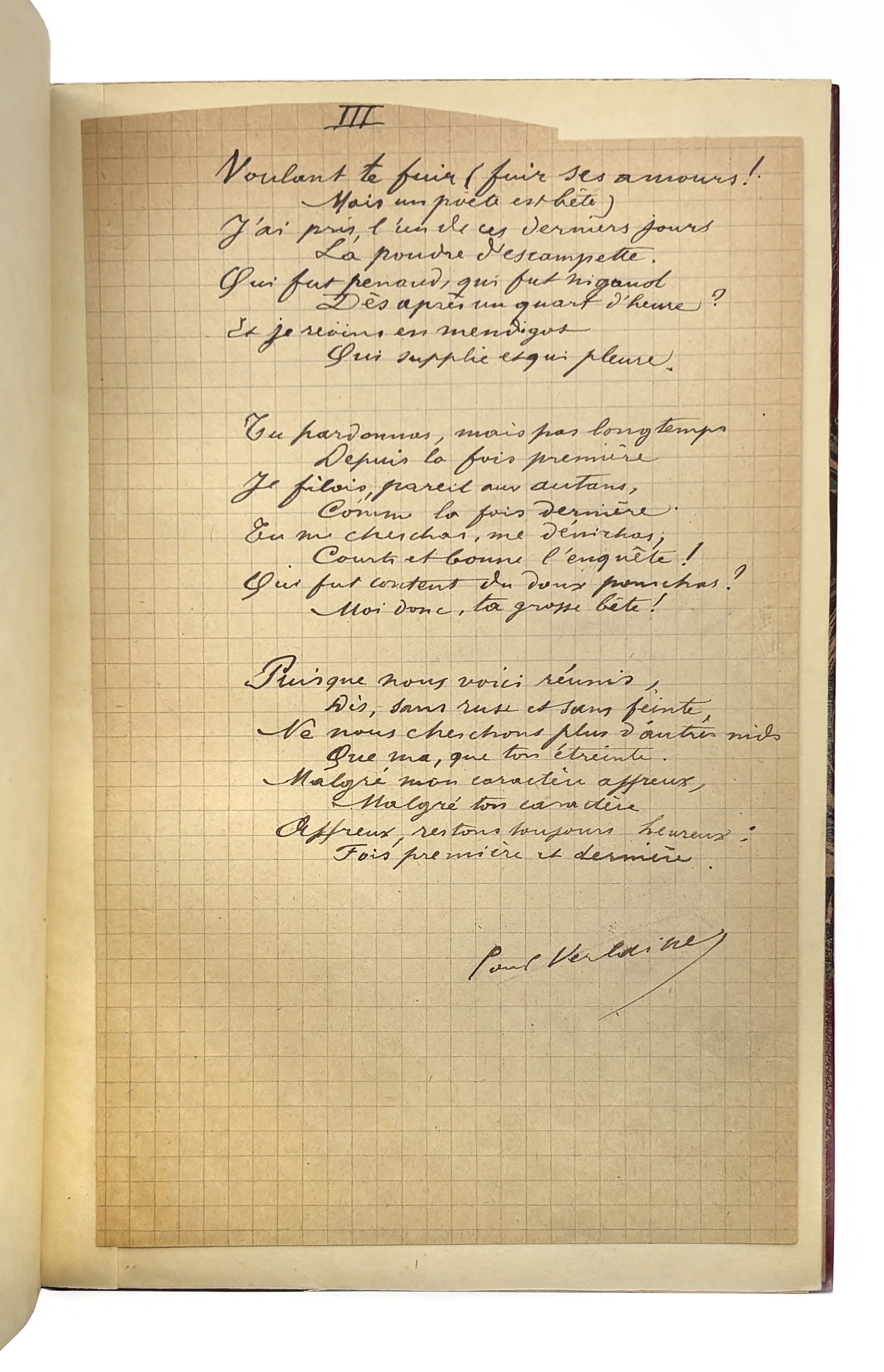
Copy with an autograph poem signed by Paul Verlaine, mounted on a stub: « Voulant te fuir », the third piece in the collection.
This poem, in three eight-line stanzas, had previously been published in Le Chat noir of 11 April 1891, p. 1728, under the title « Chansons pour elle / III ».
Chansons pour elle is to be linked with three other collections by the poet: Odes en son honneur, Élégies and Dans les limbes. Verlaine sings the qualities of « his » woman, celebrating their life together and giving free rein to envy, desire and jealousy. As Olivier Bivort reports in the Œuvres complètes: « La chanson est une constante dans l’œuvre de Verlaine. Elle a une origine lointaine en poésie et on sait qu’elle a été remise à l’honneur au XIXe siècle par le romantisme. Verlaine s’inscrit dans cette tradition dès les Poèmes saturniens. » Philomène Boudin, known as Esther, is identified as the principal dedicatee of Chansons pour elle thanks to Verlaine’s own testimony to Philippe Zilcken (L’Écho de France, 3 Feb. 1892). Delahaye, Cazals and Le Rouge paint a contrasting portrait of her: a woman with a troubled past (prostitution, entry in the police registers), surrounded by sinister legends, but also described as a « femme sauvage » who poisoned the poet’s life, though he nonetheless proposed marriage to her. Most of the collection (sixteen poems) was composed by Verlaine in twenty-five days in the summer of 1891, in the very building where Philomène lived. The contract was signed with his publisher Vanier on 4 September 1891; the volume appeared at the end of November, shortly after Mes hôpitaux. No complete manuscript of this collection has survived.
Provenance:
Bibliothèque poétique du docteur Zara
Bibliography:
Œuvres complètes, t. II, éd. Olivier Bivort, Pléiade, 2025, pp. 99-120 (pp. 103-104 for the poem)
Join our mailing list and be the first to hear our latest news and biggest announcements.
By signing up you agree to our privacy policy. You can unsubscribe at any time.